








Gift Knowledge, Your Way | Celebrating 25 years of Wikipedia and 15 years of Wikimedia UK
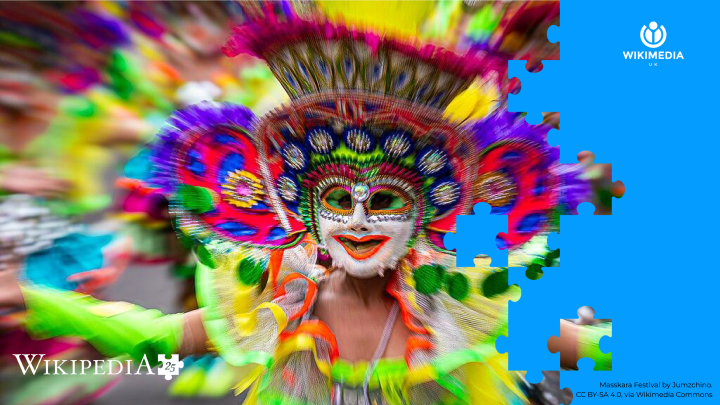
15 January 2026 marks Wikipedia’s 25th birthday, a remarkable milestone for the world’s largest free online encyclopaedia, written and maintained by a global community of volunteers. From humble beginnings 25 years ago, Wikipedia has grown into 300+ language editions and a network of sister projects, helping billions of people learn something new, answer important questions, or tumble down a late-night rabbit hole of curiosity.
Later in the year, November 2026 marks 15 years since Wikimedia UK became a registered charity, supporting the people, partnerships, and programmes that help open knowledge thrive across the UK.
To celebrate both anniversaries, we’re inviting everyone to consider what a “gift” can look like. Whether you’re brand new, a long-time contributor, a donor, or an organisation, you’re welcome here.
Gift Knowledge Your Way, throughout 2026!
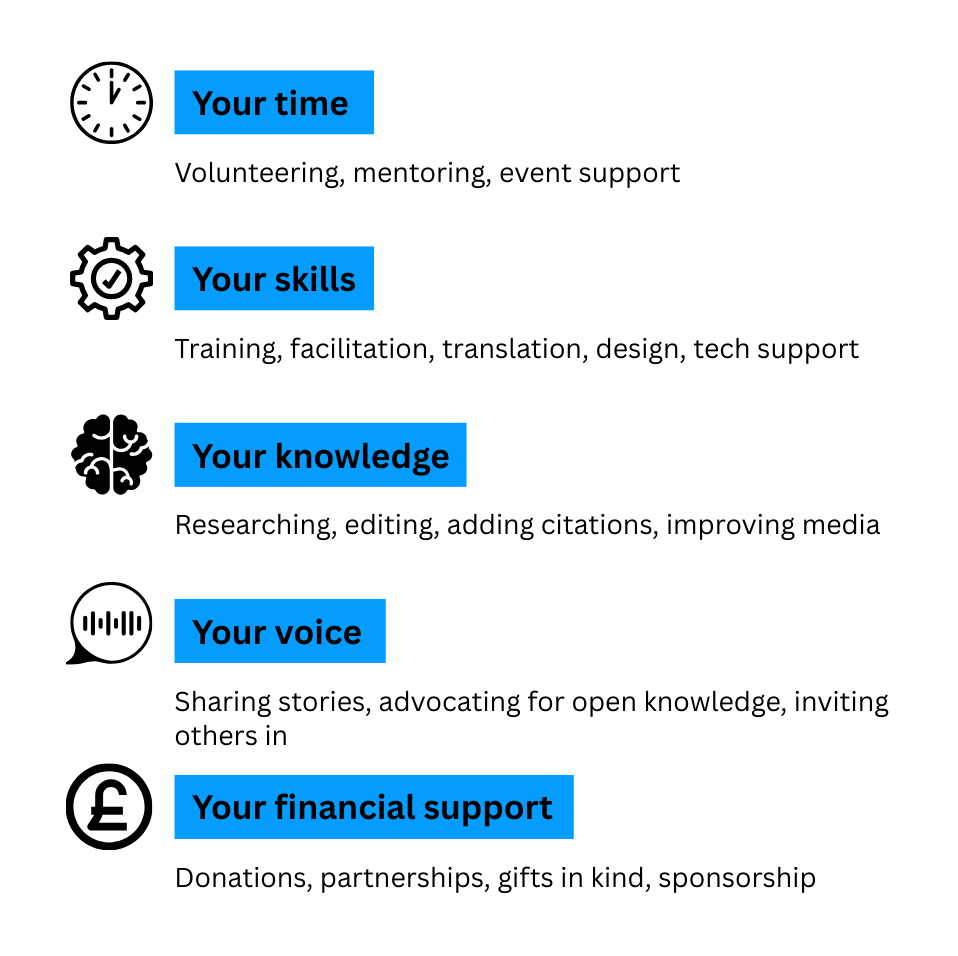
We value all our existing volunteers and supporters and also hope to welcome new generations and communities in ways that feel accessible, meaningful, and enjoyable. Let’s shape the next chapter of open knowledge in the UK, together!
If you’re a donor (or want to become one)
Small gifts make a big difference. Your support helps fund training, community programmes, partnerships, and opportunities that keep open knowledge growing in the UK.
CLICK HERE for some for some ideas of how you can gift knowledge as a donor:
- Make a one-off donation as a birthday gift to Wikipedia’s future in the UK
- Set up a monthly gift to provide steady support year-round
- Sponsor a place for someone to attend training or an event (where possible)
- Fund a specific area you care about (e.g., digital skills, inclusion, community events) where opportunities exist
- Dedicate your gift: donate in honour of a person, teacher, or community that inspired your love of learning.
- Fundraise your way: birthday fundraiser, sponsored challenge, stream, quiz night, or workplace collection.
If you’re a Volunteer/Contributor (or want to become one)
Whether you’ve edited for years or you’re curious but unsure where to start: you belong here. And you don’t have to edit to take part.
Here are some ways that you can gift knowledge as an individual Volunteer or Contributor:
- Edit your way: fix a typo, add a citation, expand a section. Even 10 minutes helps.
- Try “micro-contributions”: add image captions, tag an item, copy edit a paragraph, or improve an intro.
- Share your skills: run a mini-session (online or in-person) on research, referencing, writing clearly, translation, design, audio/video, data, or facilitation.
- Support others: welcome newcomers, answer questions, buddy up for a first edit, or help at an event.
- Help diversify knowledge: contribute topics and perspectives that are underrepresented, in the ways that feel safe and sustainable for you.
- Show your love publicly: share a favourite Wikipedia article or “thing I learned” on social media and invite someone new to explore.
If you’re an existing partner from a heritage or cultural organisation (or want to become one)
Libraries, Archives, Museums, Galleries, and Community Heritage Groups play a powerful role in widening access to knowledge, especially when collections and expertise reach people where they already are.
Some ways to gift knowledge as a partner organisation:
- Host an event: edit-a-thon, Wikidata workshop, upload session, or behind-the-scenes tour.
- Share collections openly (where rights allow): images, metadata, or materials that can enrich Wikipedia and Commons.
- Offer staff time or expertise: a curator talk, research support, or training session for volunteers.
- Partner on a theme: local history, under-documented communities, women in history, climate, arts, or regional culture.
- Create a “knowledge pack”: recommended sources, catalogue references, or reading lists for contributors.
- Support a residency or programme (where possible): sponsorship, venue space, or resources in kind.
If you’re an educational institution
Schools, colleges, universities, and other places of learning can help more people become confident digital citizens, and creators of shared knowledge.
Some ways to gift knowledge as an educational institution:
- Bring Wikimedia into teaching: run a session on information literacy, referencing, and reliable sources using Wikipedia as a learning tool.
- Host a workshop for students and staff (editing, research skills, media literacy, Wikidata, or Commons).
- Offer credit-bearing or extracurricular projects that improve open knowledge on course-related topics.
- Support staff development: training for librarians, academic staff, and student support teams.
- Open up research outputs: share summaries, images, or data where licensing allows.
- Provide space or resources: rooms, accessibility support, printing, AV, or staff time as in-kind support.
If you’re a company
Companies can support open knowledge in practical, people-powered ways, from skills-sharing to sponsorship, without needing everyone to become editors.
Here are some ways that companies can gift knowledge through partnership with Wikimedia UK
- Run a “volunteer your way” day: staff join a training session, support an event, or help with behind-the-scenes tasks.
- Skills-based volunteering: legal, HR, comms, design, product, data, accessibility, evaluation, fundraising support.
- Match employee donations or run a workplace giving drive.
- Sponsor events or programmes that expand participation and digital skills across the UK.
- Offer gifts in kind: venue space, catering, printing, travel support, software, or equipment loans.
- Amplify the campaign: share “Gift Knowledge, Your Way” internally and externally to reach new audiences.
If you don’t fit in any of the categories above (but want to support)
We’d love to hear from as many of you as possible, individuals, informal community groups, creators, faith groups, youth groups, local initiatives, and everyone in between.
Here are a few simple ideas for you to get involved:
- Host a community curiosity night (bring questions, sources, and snacks).
- Offer translation or interpretation support for events.
- Help make participation more accessible (captions, BSL support, quiet spaces etc).
- Connect us with communities who should be better represented in open knowledge and help shape how we do that respectfully.
Start small, start your way!
Pick one action that takes 10 minutes, one hour, or one afternoon, and you’ve already helped.
If editing isn’t for you, no problem: volunteering, donating, skills-sharing, attending events, or simply inviting someone new into the movement all count.