









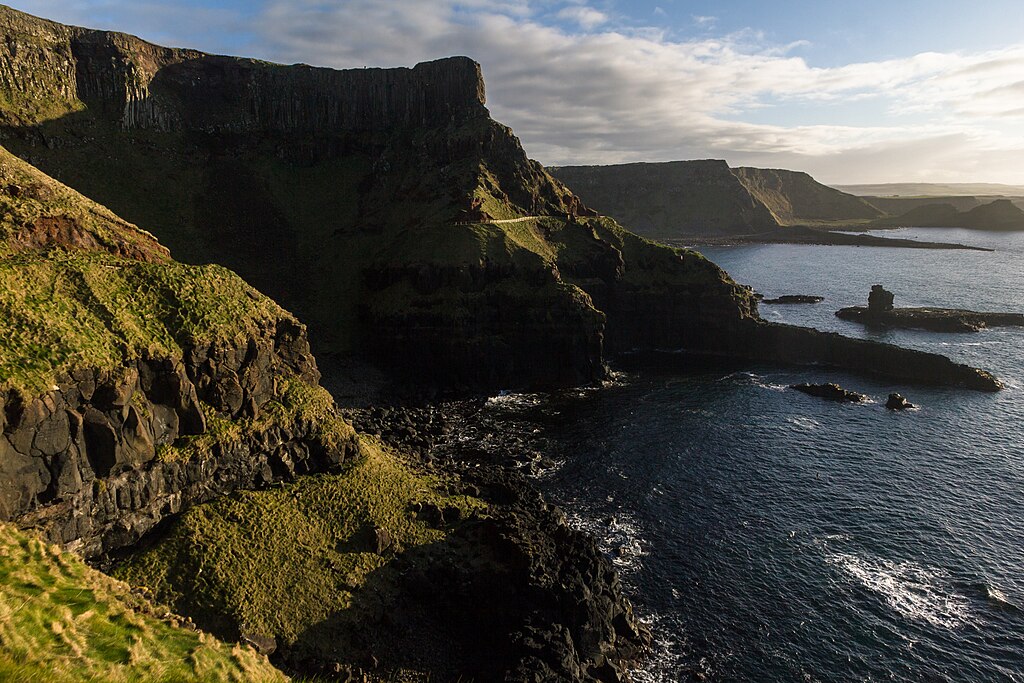
It’s now roughly halfway through the 2026 Wiki Loves Earth campaign, which runs 1 May – 30 June. Here’s a little bit about how some of our Programmes staff based in Wales, England and Scotland have been using their time, voluntarily, to raise awareness, encourage participation and highlight the different ways people can get involved with the competition.
Gemma Coleman | Wales
I love nature and I’m always taking photos of things that strike me or of plants I want to identify. But for some reason, “Wiki Loves Earth” didn’t feel immediately relevant. Making time to travel to a protected area felt hard, all I have is the phone on my camera and I’m not even really a competent photographer!
But as someone who is always taking (bad) photographs it was fun going through the pictures on my phone. There was the strikingly moody sunset at Nant Gwrtheyrn on a drizzly November evening. I was in the area for a residential Welsh course rather than the nature but the Llŷn Peninsula coast is an Area of Outstanding Natural Beauty so eligible for Wiki Loves Earth! There was the cow parsley I snapped on a lunch time walk to feed into my plant ID app. And there was that time I came across a fin whale carcass!

.jpg)

I’m still no photographer and these still aren’t the greatest pictures in the world. But it was fun to reminisce on what I’d already taken over the year (and it was an excuse to create the Beached whales in Wales category, which didn’t exist yet!)
Wiki Loves Earth in Wales page: https://commons.wikimedia.org/wiki/Commons:Wiki_Loves_Earth_2026_in_Wales
List of protected natural areas in Wales page: https://commons.wikimedia.org/wiki/Commons:Wiki_Loves_Earth_in_Wales/Protected_natural_areas
Richard Nevell | England
One of London’s highlights is the amount of green space. Even a megacity can have a place for nature. With that in mind I thought I’d see where the nearest eligible place for Wiki Loves Earth is. The first challenge is avoiding the red herrings. London has lots of parks, but the competition is specifically about protected places. The most common designation is Site of Special Scientific Interest, so was the best choice for something nearby. Just over 40 minutes on the bus took me within a short walk of the Chingford Reservoirs. I checked the route to the reservoirs on Google Maps and my plan was to go to the reservoirs and take a snap from the road.
So far so good!
On arrival, I was struck by the size of the embankment around the reservoirs which reminded me of the remains of Iron Age hillforts, and were calling out to be climbed. However, I couldn’t see the reservoir from the road. One thing I should have considered was whether I could get into the protected area and a large metal fence made it clear that wasn’t going to be possible. Though it’s not what I expected, I do quite like the photograph, though you probably wouldn’t know it’s a reservoir unless someone told you as much. The moral of the story is: if you are making a trip just to visit to take a photograph, check if there is access. And if that fails, find somewhere nearby to get a consolation snack.
Wiki Loves Earth in England competition page: https://commons.wikimedia.org/wiki/Commons:Wiki_Loves_Earth_2026_in_England
List of protected natural areas in England page: https://commons.wikimedia.org/wiki/Commons:Wiki_Loves_Earth_in_England/Protected_natural_areas
Sara Thomas | Scotland
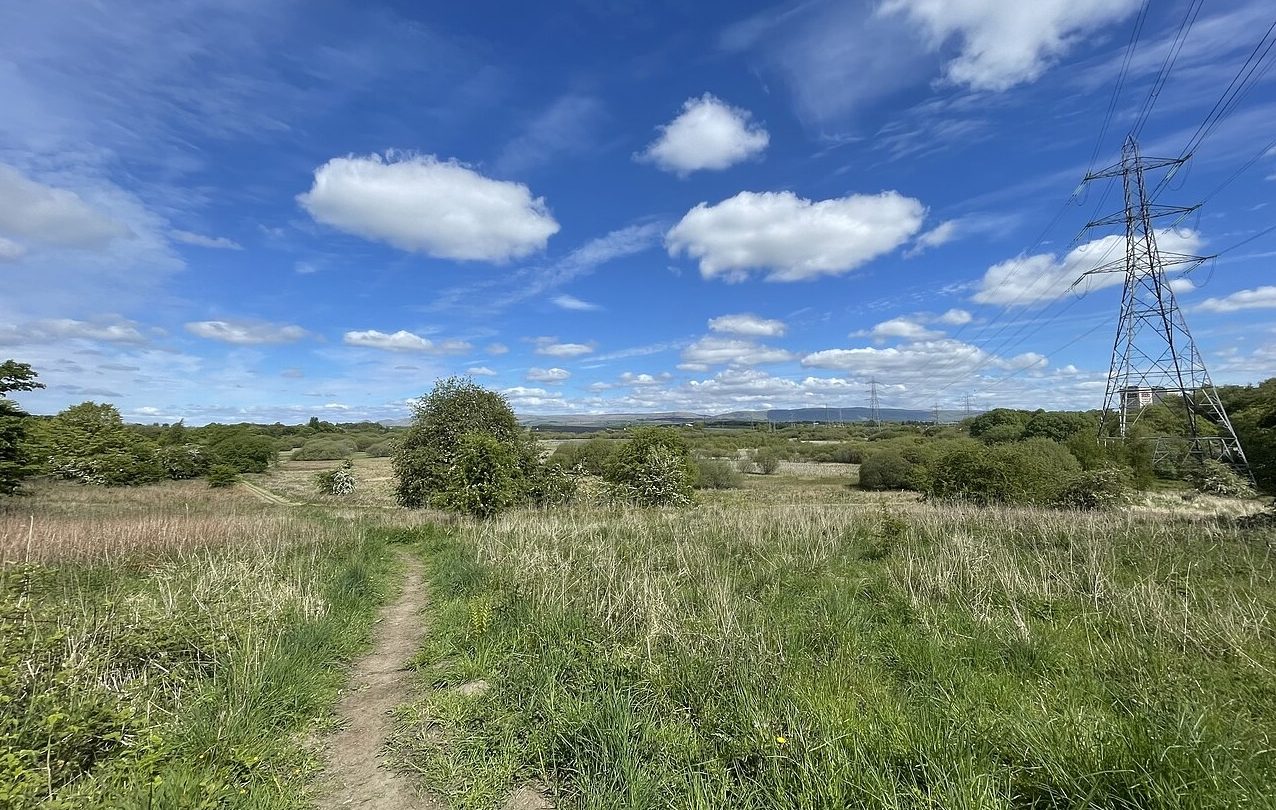
Living in Glasgow, I’m normally more of a Wiki Loves Monuments participant than Wiki Loves Earth. But I’ve been thinking a lot recently about how the Wikimedia projects help us to interact with physical space and location, which led me to the Possil Marsh article on en.wiki. If you’re familiar with the city you’ll know that North Glasgow often has a reputation primarily characterised by its experience of poverty rather than its rich community spirit or industrial history, but I know Possil Marsh (a Nature Reserve and a Special Site of Scientific Interest), Hamiltonhill Claypits, the nearby River Kelvin, and the Forth & Clyde Canal as havens for nature, and reminders of why Glasgow’s Dear Green Place nickname remains quite so apt. I guess that it may be unexpected to find SSSIs within city boundaries, but Glasgow has two!
Pictures make a difference when it comes to Wikipedia, and the Possil Marsh article only had one image, which was taken in 2009. I wanted to expand on that, to give more of a sense of what the place feels like, and what you can find there. With it being Wiki Loves Earth season, it seemed like an appropriate time to take a sunny Saturday morning wander.
I got a few good shots (well, as good as I can get on a mobile phone) showing the wider location context, some close ups of interesting plants, and found a path I’ve not taken before that let me get closer to the water to show Possil Loch itself. I’ve now added a few more images to the article, and created a new “Possil Marsh” category on Commons. Not a bad way to spend a Saturday morning!
Wiki Loves Earth in Scotland competition page: https://commons.wikimedia.org/wiki/Commons:Wiki_Loves_Earth_2026_in_Scotland
List of protected areas in Scotland page: https://commons.wikimedia.org/wiki/Commons:Wiki_Loves_Earth_in_Scotland/Protected_natural_areas
If you’re in Northern Ireland, you can find out more about the Irish competition here: https://wikimedia.ie/2026/05/01/wiki-loves-earth-2026-in-in-ireland-and-northern-ireland-photography-competitons-are-open/