Join us for our online Community Celebration event, taking place on Saturday 15 November, from 11am to 1pm.
The gathering will celebrate the achievements of our incredible community over the past year, recognise outstanding contributions through the UK Wikimedian of the Year Awards, and showcase inspiring projects from across the UK through a series of lightning talks.
Over the past month, we’ve reached out to community members for talk proposals, and we’re thrilled with the lineup we now have! So much remarkable work happens behind the scenes in our movement, and this event is a chance to shine a light on those efforts and celebrate them together.
Following the lightning talks, we’ll present the annual UK Wikimedian of the Year Awards. You can find out about last year’s awards here.
This celebration is open to everyone, both Wikimedia UK members and anyone interested in learning more about Wikimedia’s work in the UK and getting involved.
Tickets are free, but you need to reserve your place by registering here.
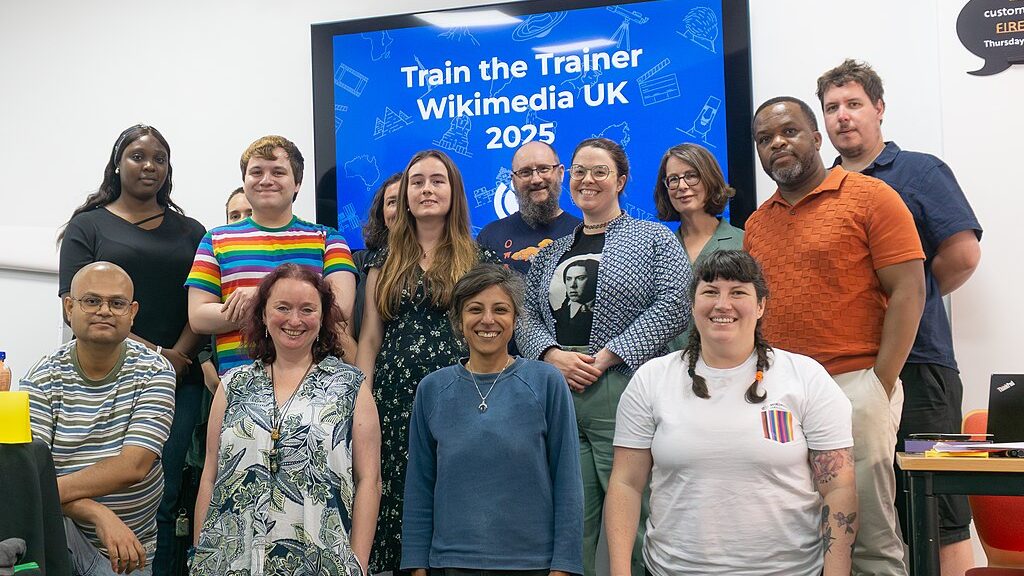
Wikimedia UK’s flagship Train the Trainer (TtT) course returned in summer 2025, bringing together volunteers from across the UK and around the world to develop the skills needed to deliver Wikipedia editing events in their own communities. Designed to build confidence and strengthen diversity, this year’s programme welcomed 23 participants from eight countries, including many from underrepresented groups.
For the first time, the course included both in-person and online international training, expanding access and supporting Wikimedia’s global mission. Participants took part in a WikiLearn course, hands-on workshops, and interactive sessions led by Programme Manager Dr Sara Thomas and UK Wikimedian of the Year Fran Allfrey.
Feedback was overwhelmingly positive. 100% of respondents said they felt better equipped to make positive change in their communities. New mentoring opportunities and regular online edit-a-thons are now being introduced to help new trainers continue developing their skills and confidence.
One of our long-standing partners in Scotland is the IDEA Network at the the University of St Andrews. Based at the School of Computer Science, the Network looks broadly to make knowledge production inclusive, diverse, equitable and accessible. Part of their work has been the development of a range of Wiki-activities in and out of the classroom, including Summer programmes, undergraduate and postgraduate work, as well as outreach events with community partners. At the time of writing, on-wiki material which has been worked on as part of the Network’s activity has gained 3.38 million article views.
I invited Dr Ross (who, along with Dr Ardati, also of the IDEA network, and Dr Bhatti, a co-author of the below blog, have all attended Wikimedia UK Train the Trainer courses) to tell us more about one of this year’s Summer programmes. / (Dr Sara Thomas, Programme Manager, Wikimedia UK)
Authors: Kirsty Ross (School of Computer Science, University of St Andrews), Saeeda Bhatti (Medical School, University of Glasgow), Pauline Souleau (School of Modern Languages, University of St Andrews)
During COVID there was a lack of summer internship opportunities for undergraduates due to pandemic lockdowns and restrictions on travel. The Summer Team Enterprise Programme (STEP) at the University of St Andrews, Scotland, was designed to fill this gap and has run every summer since 2020. STEP is an opportunity for undergraduate students to invest 6 weeks in participating in a fully-online skills development programme, where they work on a real-life project designed and supported by University staff, gain virtual team-work experience in a group of diverse students, contribute to the University’s learning and teaching through working on impactful outputs, and get this experience listed on their academic transcript.
My name is Dr Kirsty Ross and I’ve been involved in STEP since its inception. As a project sponsor, my role is to propose a suitable project and provide direction to the student teams. I’m also the co-founder of the Inclusion, Diversity, Equity, and Accessibility in Open Knowledge Network (IDEA Network for short) at the University of St Andrews which aims to address knowledge gaps in the Wiki projects by training others and building capacity. STEP has been a fantastic mechanism for introducing undergraduates to the wonders of Wiki and providing evidence of real-world impact, even resulting in a peer reviewed public engagement paper!1
Research has shown that Wikipedia is the most common source for obtaining medical information online. Amongst medical professionals, more than 90% of medical students and 50% of doctors have turned to Wikipedia at some point2. However, there is substantial variation in the length and quality of medical content in different languages. For example, pneumonia is a topic that is currently available in 134 language versions. However, the English Wikipedia article for pneumonia contains approximately 7,600 words and has 172 references, whereas the equivalent article in Urdu is just 125 words long with 1 reference. We drew inspiration from the excellent work of WikiProjectMed, which inspired the name of the project!
Over WhatsApp, Dr Saeeda Bhatti (Medical School, University of Glasgow) and I discussed how we might plug some of these medical knowledge gaps. Dr Bhatti’s background is in medical education and genetics, so we discussed targeting articles about rare genetic diseases. Using the Medics 4 Rare Diseases website, we narrowed down over 7000 rare diseases to a shortlist of 12 conditions. This shortlist formed the basis for the Healthcare Translation Task Force STEP project.
As part of the STEP application process, students choose which projects they would like to take part in over the summer. We ended up with two teams and 11 students in total. These students could speak, read, and write in 15 languages! We then explored Wikidata to find out whether or not those languages had articles about the chosen rare genetic diseases. Some languages (Arabic, French, German, Spanish) had almost complete article coverage (92-100%). Others (Simple English, Japanese, Korean, Mandarin, Russian) had approximately 50% article coverage. Cantonese, Croatian, Kiswahili, Kurdish, Serbian, and Somali had either no articles or just one or two (8-12%)! As the project was just 6 weeks in duration and was often balanced alongside paid work or internships, we weren’t going to be able to plug every single gap, so it was over to the students to decide how to proceed.
Dr Pauline Souleau (School of Modern Languages, University of St Andrews) also provided training on how to adapt their translations to suit the cultural context; we wanted to avoid overly relying on the existing versions in English. When asked to reflect upon her experience of STEP, she said:
“The cross-disciplinarity of the STEP programme means that participating students are not necessarily trained linguists. Part of the Healthcare Translation Task Force STEP training was therefore to introduce students to the importance of localisation and cultural awareness when translating a wiki article.”
“When an article did exist in English, the aim was never to translate it word for word but to a) make it clear in the target language and b) adapt it to the target culture if needed. During the training session, we therefore discussed questions of language variants, as well as specialised terms, article titles, and disease names. Students took it on board and showed nuanced translation skills throughout the project.“
The students worked together to describe and name the conditions in their languages in Wikidata. They then picked a couple of articles to research, draft, and upload. Many roped in friends, family, and medical professionals to provide feedback on their drafts. The students also hunted down references in their own languages. Wikipedia depends on reliable, secondary sources3, and readers of a specific language should be able to verify the statements in the article4, without having to know English as well.
The students’ enthusiasm and commitment exceeded our expectations! 11 students, speaking 15 different languages, spent the summer creating 12 brand new articles, editing an additional 38 articles, adding 61,000 words and 555 references. Table 1 links to the articles in various languages; we’d love to see the wider Wiki community get stuck in and expand them even further!
Table 1. Newly created articles as well as articles that were edited as part of the Healthcare Translation Task Force STEP project. At least 200 words or more were added to the articles below. Articles are ordered by the numbe rof words added (most to least).
As of mid-August 2025, the newly created and edited articles have been viewed nearly 58,000 times (see Figure 1 below), a testament to the real-world impact of student contributions. We hope this project inspires further translation efforts and continues to grow through community contributions.
None of the above would have been possible without the dedication of the students and their PGR coaches. They were: Dasha Andreeva, Alistair Grant, Lila Darmon, Mingxiao Yang, Lucie Siu, Aro Aziz, Summer Kwon, Jacqueline Park, Anne Foote, Anna Mokhovik, Aleksandra Lucic, Zamzam Issack, Axel Van Den Ancker, Lareina Yang (STEP students) and Ziying Ye and Maya Fenyk (STEP PGR coaches).
References
1. Cornwell RM, Ross K, Gibeily C, et al. Unearthing new learning opportunities: adapting and innovating through the ‘Antibiotics under our feet’ citizen science project in Scotland during COVID-19. Access Microbiol. 2024;6(6). doi:10.1099/acmi.0.000710.v3
2. Heilman JM, West AG. Wikipedia and Medicine: Quantifying Readership, Editors, and the Significance of Natural Language. J Med Internet Res. 2015;17(3):e62. doi:10.2196/jmir.4069
On Monday 20 October, Wikimedia UK joins forces with the British Library and the Wikimedia Foundation to explore the impact of AI on open knowledge and the wider information landscape. Fundamental to this landscape are contributions from humans, including professionals from media, research and cultural heritage, as well as the volunteers who contribute to the Wikimedia projects and other open platforms.
This day-long summit brings together experts and practitioners in the British Library’s Knowledge Centre to discuss the threats and opportunities at the intersection of AI, open knowledge and human rights. As we look to the future of information, how do we ensure that machine learning supports human learning, and build sustainability and information integrity into new models of content creation?
At the heart of the event is the idea that the creation and curation of knowledge is fundamentally a human endeavour.
I’m delighted to be joining Wikimedia UKas the newEducation Lead. It’s an honour to work with a charity that champions free and open knowledge for all, equality in online representation, digital democracy, and critical thinking. I look forward to working with schools to develop a programme of information literacy that reflects these values.
My background is in Further Education, where I taught philosophy in Birmingham for more than 22 years. I recently completed a PhD exploring philosophy and mental health, building on my long-standing interest in how ideas shape the way we live and learn.
Alongside my teaching, I serve on the Executive Committee of the Children’s Media Foundation. I am especially interested in how media can be used to promote critical thinking in an age of increasing misinformation and fake news.
Having worked with young people for many years, I’ve seen first-hand how rapidly the ways they consume information are changing and how urgent it is to make information literacy an integral part of education.I would love to connect with others who share these interests. Please feel free to get in touch at sally.latham@wikimedia.org.uk .
We are excited to announce that nominations are open for the 2025 UK Wikimedian of the Year Awards.
You can nominate individuals and organisations that have been involved with Wikimedia UK’s efforts to advance open knowledge during 2024/25.
Categories
This year’s categories are:
UK Wikimedian of the year (Individual)
Partnership of the year (Organisation)
Up and coming Wikimedian (Individual)
Criteria
We are looking for people and partnerships within the Wikimedia UK community who have really impressed with their open knowledge work in 2024/25. We are particularly keen to hear about people and organisations who delivered projects addressing our strategic themes of Knowledge Equity, Information Literacy, and Climate and the Environment.
Nominations will be judged by members of the Community Development Committee and winners will be announced at the Community Celebration on Saturday 15th November 2025.
How to nominate
You can submit two nominations per category using this Google Form . The closing date for submissions is 22nd October 2025.
Wikimedia UK has today published its latest Strategic Report, showcasing progress and impact across its key themes of knowledge equity, information literacy, and climate and the environment. The report highlights how the charity’s work is helping individuals and communities to access, contribute to, and critically engage with free knowledge at a time of growing challenges to information integrity worldwide.
Over the past year, Wikimedia UK has strengthened its partnerships with educators, cultural institutions, and civil society organisations to expand inclusive knowledge and develop critical information literacy skills. The report also demonstrates how Wikimedia UK is supporting the creation and dissemination of accurate, open knowledge on climate change, an issue of urgent global importance. An independent evaluation found clear evidence of impact, from embedding information literacy in schools and universities to amplifying underrepresented voices on Wikipedia.
Explore how you can support Wikimedia UK’s mission, whether by donating, partnering, or volunteering, to help build a more open and informed future.
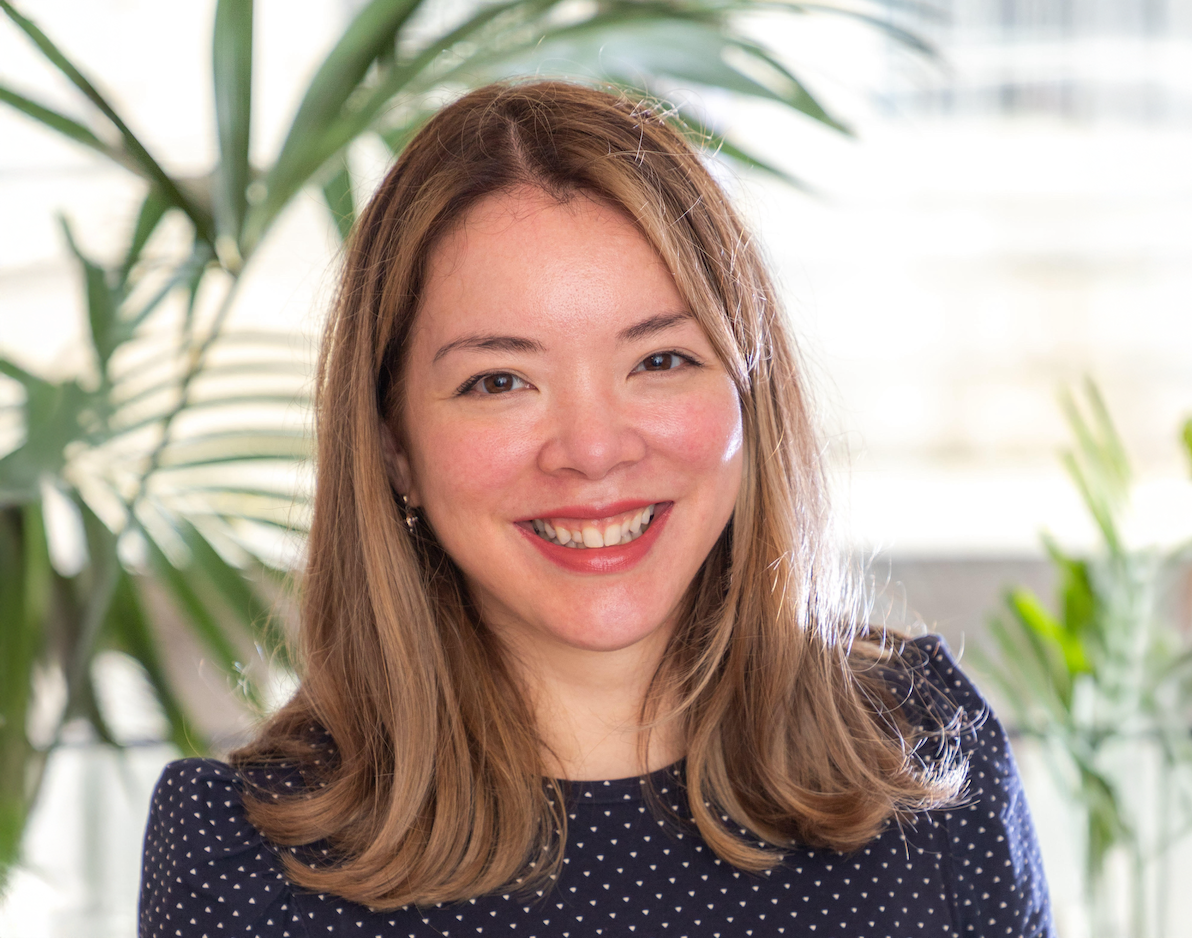
Wikimedia UK, the national charity for the global Wikimedia movement, is delighted to welcome Lucy Yu as our new Chair following her formal appointment to the Board of Trustees on 18th September 2025. She replaces Monisha Shah, who stepped down in June 2025 after serving four years as Chair of the Board, and is being awarded an Honorary Membership of Wikimedia UK at the 2025 Annual General Meeting.
Lucy was co-opted through an open, competitive recruitment process. As founder and CEO of the Centre for Net Zero, and the UK government’s AI Champion for Clean Energy, Lucy brings valuable experience in organisational leadership, open data, public policy, and emerging technologies – all highly relevant to Wikimedia UK’s future direction. During the recruitment process Lucy also demonstrated a deep commitment to open access, with experience of leading and implementing open data policies and practice, and a thoughtful, collaborative approach to charity governance.
Lucy Yu comments:
“I’m very pleased to join Wikimedia UK as the new Chair of the Board. Having built my career around technology for the public good, I am a huge admirer of the Wikimedia projects and often think of Wikipedia as one of the great wonders of our internet world. As chair, my priorities are to drive the widest possible access to Wikimedia’s open content, recognising in particular the role and impact of new AI-based technologies and tools; and to find and nurture the next generation of contributors to these vital resources. I am delighted to inherit an impressive and dedicated set of colleagues in this mission and I am looking forward to working with Lucy Crompton-Reid, Chief Executive of Wikimedia UK, and her team. Many and grateful thanks go to my predecessor Monisha Shah, and interim Chair Alex Ashby.”
Lucy joins Wikimedia UK as our new Chair at an exciting time, as we reflect on a period of sustained growth in the charity’s income, impact and profile, and look forward to delivering our ambitious new strategy for 2025 to 2030.
Alex Ashby comments:
“It has been a privilege to serve as Interim Chair during this important transitional period for Wikimedia UK. I’m delighted to welcome Lucy Yu to the role and confident that her leadership will be transformative for the charity. Her collaborative style and strategic insight stood out throughout the recruitment process, and I look forward to supporting her and the Board as we embark on the next chapter of Wikimedia UK’s journey.”
Wikimedia UK and Wikimedia Community Ireland are delighted to to invite you to the Celtic Knot Online Celebration Day 2025, taking place virtually on Tuesday, 23rd September, from 1:00 pm to 4:00 pm (BST/IST).
This special online event invites contributors, advocates, and community members working with Celtic and other minority and minoritised languages for an afternoon of connection, collaboration, and celebration. Whether you’re a seasoned Wikimedian, a language activist, or simply curious about the power of open knowledge, this is your chance to be part of a growing movement.
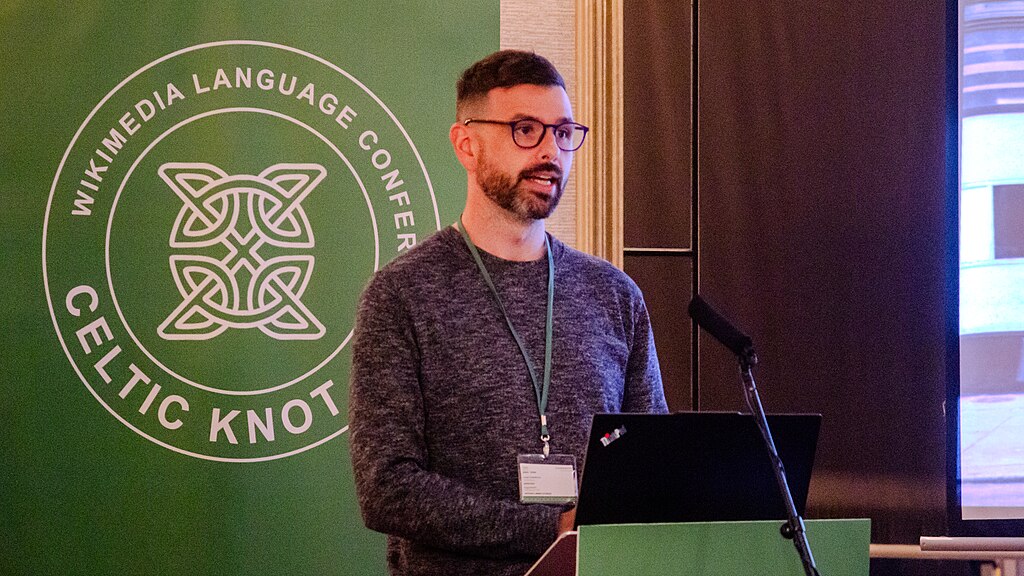
Celtic Knot Conference 2024 | Benjicarter, CC BY-SA 4.0, via Wikimedia Commons
What to expect
Inspiring presentations and lightning talks highlighting new projects, breakthroughs, and stories from across Wikimedia’s language communities.
Hands-on interactive workshops designed to spark fresh ideas and practical skills.
Community-led activities that celebrate cultural diversity and language resilience.
Opportunities to network, reconnect, and build collaborations with like-minded people across borders.
Following the success of last year’s in-person Celtic Knot Conference in Ireland, the 2025 online celebration offers a chance to look back at our progress, share our experiences, and set the stage for the future of multilingual knowledge on Wikimedia projects.
More details on speakers, the schedule, and session topics will be announced soon.
About the Celtic Conference
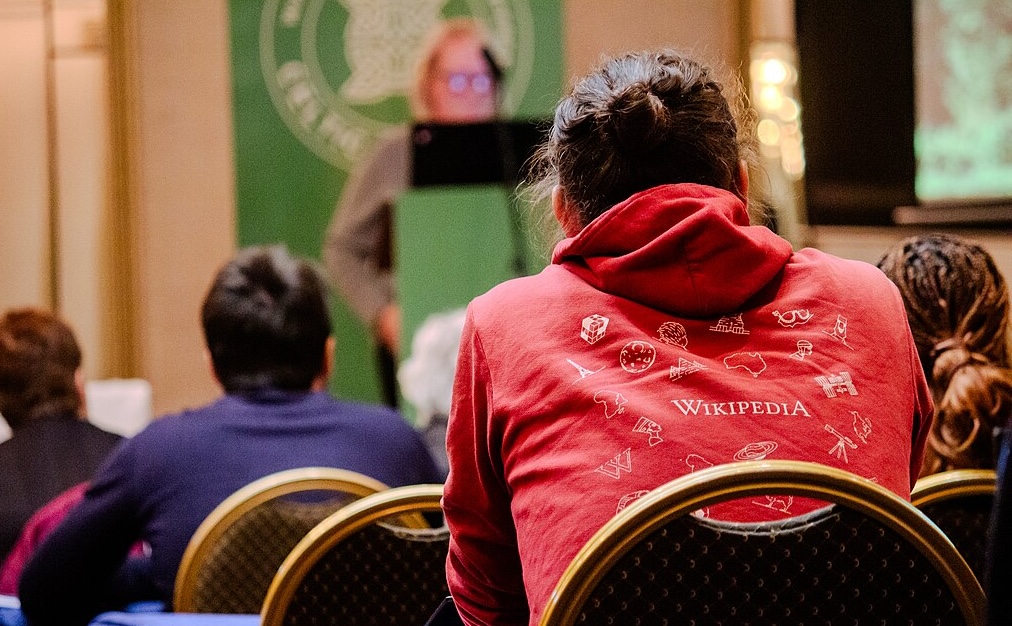
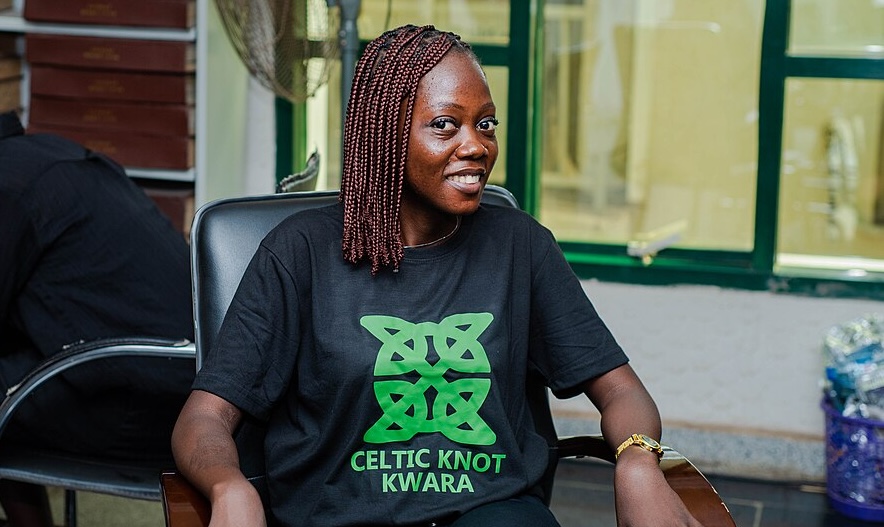
Celtic Knot Kwara 2022 | Linason Blessing, CC BY-SA 4.0, via Wikimedia Commons
The Celtic Knot Wikimedia Languages Conference brings together people who are passionate about sharing knowledge in Celtic and other minority languages on Wikimedia platforms. The event provides an opportunity for contributors to connect, learn, and support each other in overcoming language barriers through collaboration, community building, and the use of technical tools.
Whether you’re working on Wikipedia, Wikidata, Wikisource, or related projects, the Celtic Knot provides a valuable opportunity to grow your skills and networks. The annual conference is a place where people working on growing and maintaining their communities (on Wikipedia, but also Wikisource or Wikidata) can meet, learn from each other, and support each other on topics like community growth, technical tools, or collaboration with partners.
Now in its eighth year, and supported by Wikimedia UK and local partners, the Celtic Knot continues to build on the momentum of past editions—including two successful online events.
High Court’s ruling on the Wikimedia Foundation‘s challenge to the UK Online Safety Act Categorisation Regulations
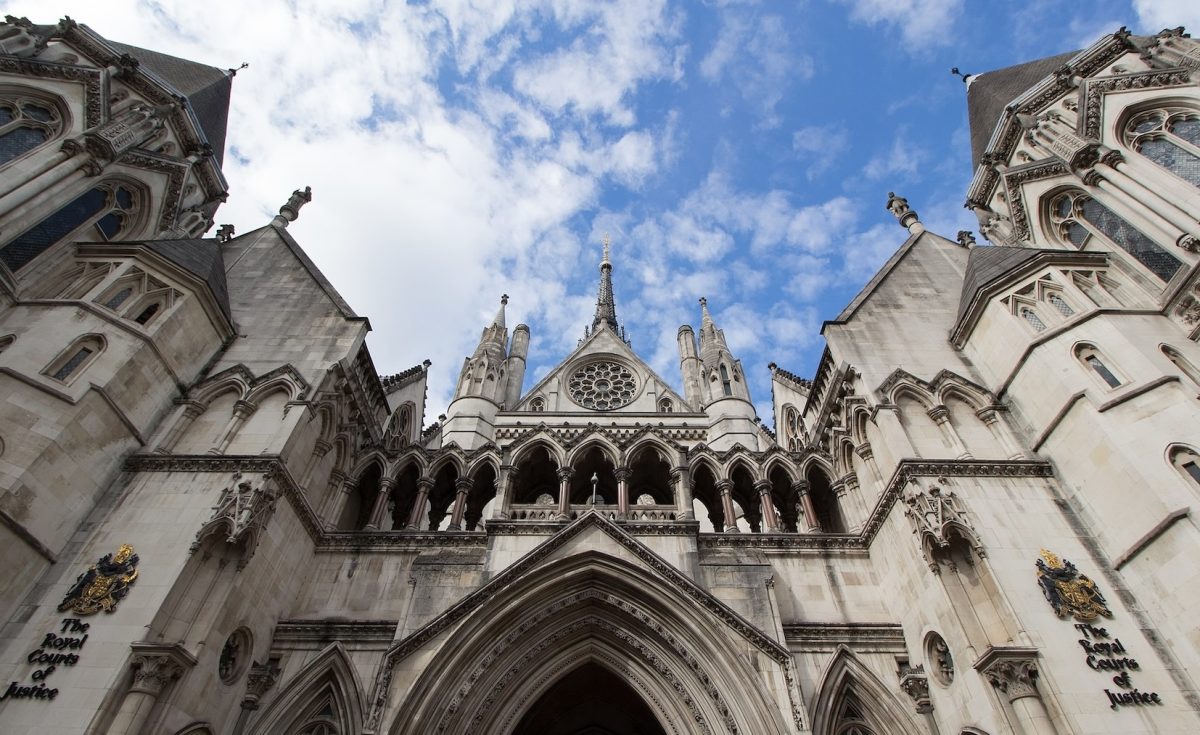
Update: On Monday 11 August, the UK High Court dismissed the Wikimedia Foundation’s legal challenge of the Online Safety Act’s categorisation thresholds, which could see Wikipedia designated as a category 1 service.
Whilst this could be interpreted as a step backwards for free expression, privacy rights, and open access to knowledge, it’s clear that the judge recognised the value of Wikipedia and the need to protect public interest websites from the most damaging requirements of the law.
Our entire community in the UK remains firm in our commitment to keep Wikipedia open, accessible, and free. We will continue to advocate for a regulatory framework that recognises public interest knowledge platforms as distinct and vital contributors to democracy and free expression.
You can read the Wikimedia Foundation’s full statement here.
Potential legal challenge of the UK Online Safety Act Categorisation Regulations by the Wikimedia Foundation
8 May 2025 – Wikimedia UK is not a party to this claim as we are not the legal hosts of Wikipedia.
Wikimedia UK is an independent charity based in the UK. As the national chapter for the global Wikimedia movement, we are committed to open knowledge and free access to information. Wikimedia Foundation is a key funder of our work. We also receive project-based funding from other organisations such as the National Lottery Heritage Fund, Big Lottery Fund and Swire Charitable Trust in the UK, as well as donations from individuals.
As an independent educational charity, Wikimedia UK has been an active advocate for public interest projects like Wikipedia to be exempt from the UK Online Safety Act. We have participated in a wide number of consultations, debates, discussions with ministers, parliamentarians, civil servants, academics, educationalists, child rights organisations, the regulator and those working to promote free expression to express our concerns about the Online Safety Act and its implications for access to information in the UK. We have clearly articulated our view that Wikipedia should not be subject to the most onerous requirements of the UK’s regulatory framework for online safety, which has been designed principally for profit-making, algorithmically driven social media platforms.
We share Wikimedia Foundation’s concerns about the recently announced categorisation thresholds for the Online Safety Act, and their implications for Wikipedia.
You can read the Wikimedia Foundation’s blog post on their legal challenge here. Media enquiries can be directed to press@wikimedia.org at the Wikimedia Foundation.
By using this site, you agree we can set and use cookies.