







Why Wikimedia belongs in education

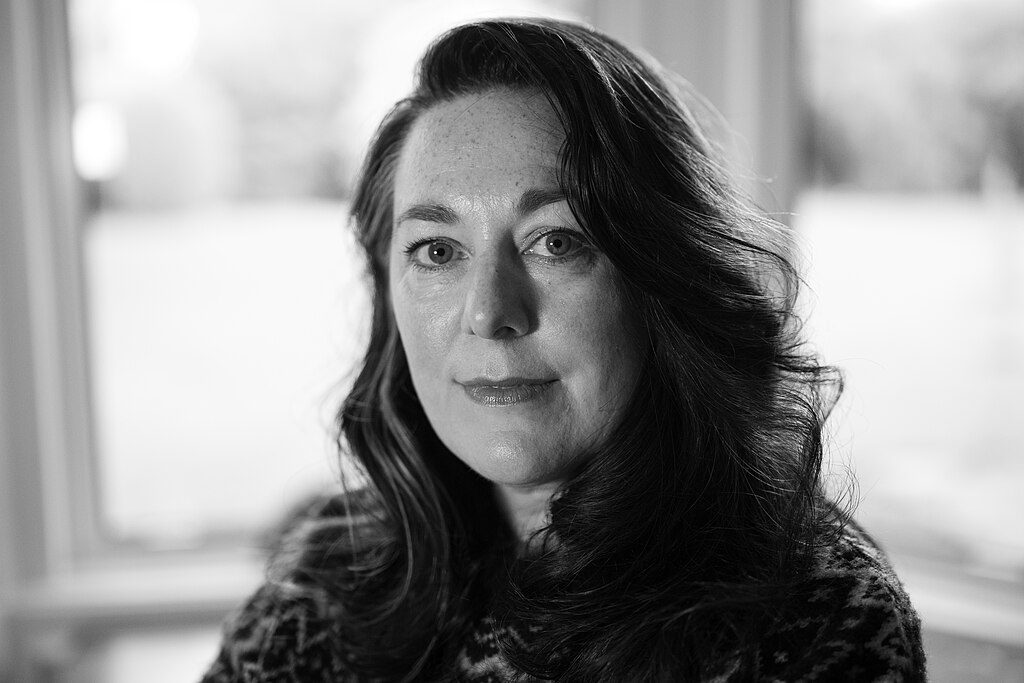
By Dr. Sally Latham, Education Lead at Wikimedia UK |

I came to the role of Education Lead at Wikimedia UK after 20 years of teaching A level Philosophy in a Further Education college. I had always strongly felt that critical thinking skills should be taught to all young people, regardless of social or educational background. This will enable us to move toward a more equitable society and see more diversity in politics, media and society in general.

The changing face of education in the digital age

Over my many years of teaching, I saw gradual changes in how young people engage with the digital world. I also saw how those changes became drastic over time. Students have always been passionate about causes, always curious and keen to learn about the world they lived in. But they were increasingly being exposed to more information than ever before. That information came from more sources and also arrived at a faster pace than ever before.

The philosophical skills I was teaching them had always been about critically engaging with information they are given, learning how to spot good from bad arguments, questioning what they are told and having the confidence to articulate their own thoughts and opinions. But now these skills are crucial in navigating the digital world in an age of misinformation, disinformation and conspiracy theories, and where developments in AI blur the boundaries of truth and fiction. Those students who did not develop these skills are increasingly at risk of polarisation, or at worst radicalisation. 

The digital divide and education.

During my time in education I was also involved in widening participation in Higher Education, running programmes to help students overcome barriers to reaching top universities. Many of our students were the first generation to go into post-compulsory education and came from a variety of challenging backgrounds. Socio-economic barriers had always existed, but now the digital divide added a new dimension to inequality.

Digital poverty includes a lack of access to technology and online information. It also needs to be understood as poor information literacy. If students cannot critically assess the digital information they encounter, they become vulnerable. They are more exposed to misinformation and disinformation. As a result, they are also more vulnerable to harm. Since 16-year-olds will soon be able to vote in general elections, they will become targets online. Fake news and conspiracy theories are likely to focus on them. Students also need to learn how to check sources. They must assess information for reliability. They also need to use AI responsibly and effectively. Without these skills, they may struggle academically at university. This can lead to higher dropout rates. It can also widen educational divides.

From the Classroom to Wikimedia UK

The move from teaching to Education Lead at Wikimedia UK was something that was very natural for me. Wikimedia UK is the UK chapter of the Wikimedia Foundation, a charity supporting all the Wiki projects and community of volunteers. The most well-known of these projects is of course Wikipedia. When I began teaching most teachers still warned against using Wikipedia as a research tool. Times have changed, although some misconceptions about Wikipedia do still exist.

Why Wikipedia should be used in the classroom

At the heart of Wikimedia UK’s work is the belief that every human should have free and equal access to the sum of all human knowledge. The charity works hard to break down barriers which prevent individuals and groups from accessing and shaping open knowledge. Wikipedia itself is the product of collaboration and the work of volunteers across the globe who produce, edit and monitor its content. Campaigns and projects work to increase representation on Wikipedia, both in those contributing and in the content, and young people play an important part in that process. 

Wikipedia also strives for the core principle of neutrality, with articles giving proportionate weight to different viewpoints when they exist and lacking bias or opinion. Combined with the principles of transparency (all edits are visible) and verifiability (articles strive to be clearly sourced) Wikipedia is one of the few places where young people can go for a neutral, unbiased perspective. In a world of fake news and influencers this is more important than ever. 

Where Wikimedia UK comes in

Wikimedia UK encourages critical evaluation of online information, including of Wikipedia itself. Some articles need improving in content or citation, and there are knowledge gaps to be filled. Debates occur on the talk pages about the best way to present information. But all of this encourages complexity resilience, being more comfortable with an increasingly ambiguous, complex, and difficult world, rather than simply offering definitive answers or actions (like conspiracies theories or answers given by AI often do). 

Following the Curriculum and Assessment Review of English schools, media and information literacy has been recognised as a crucial part of education. At Wikimedia UK we are committed to helping teachers and students navigate this increasingly complex and important topic by providing teacher training, classroom materials and workshops.

I am proud to be part of something that will empower young people to build digital resilience, safeguarding their wellbeing and allowing them to make informed decisions as they become the ones to shape the future. 

Interested in Workshops or Collaboration? Let’s Talk

My role as Education Lead at Wikimedia UK involves developing materials and workshops to teach young people crucial media literacy skills. If you are an educator interested in bringing this work to your school or college, or an organisation looking to collaborate on media literacy projects I would love to hear from you.

Dr Sally Latham (sally.latham@wikimedia.org.uk)

Wiki Loves Photography – volunteers wanted

Are you a skilled photographer? Do you have a way with words? Are you passionate about data?

Just like everything else Wiki, the “Wiki Loves” competitions every year couldn’t happen without the hard work and contributions of a flurry of volunteers who help us promote and judge the competitions and maximise the use of the subsequent images throughout the different Wiki projects.

2026 is no different and we’d love your help! We have three competitions this year… 

Wiki Loves FolkloreFebruary and March 2026

Wiki Loves Earth – May and June 2026

Wiki Loves Monuments – September 2026

To help us with managing these competitions we’re looking for the following volunteers for any or all of the above competitions.

Comms & Community supportWe need volunteers who can help us make sure we’re shouting about the “Wiki Loves” competitions in the right places, making it easy for people to take part and celebrating the efforts of those who do. 

Competition judge – Our judges help determine which are the best entries that have been submitted to a particular competition and which we should submit to any international panel. The role might suit people with photography experience themselves or who understand the importance of high quality images to Wiki projects

Data volunteerAnd of course, we want these images to be useful and helpful in the wider Wikiverse which is where data volunteers come in. If you’re knowledgeable about Wikidata, we’d love your help!

Follow the links above for more information or for a no obligation chat email volunteering@wikimedia.org.uk

Introducing the new Wikimedian In Residence at LSE

Since 2020, The London School of Economics and Political Science (LSE) has been sharing information on Wikidata (an open source database) about its research. Wikimedia UK has been providing support and advice, and over the years this collaboration has grown, reaching an important landmark in 2025: the appointment of a Wikimedian in Residence and Research Visibility Champion at LSE.

Adam Harangozó stepped into the role in December 2025, combining sharing openly licensed content, training and preparing learning resources, with bibliometrics tools to help researchers make their work more visible. The project will last for two years and aims to support LSE and the wider international social science community in developing open knowledge and sharing insights and expertise through the Wikimedia projects. Adam has previously worked as a Wikimedian in Residence for the National Institute for Health and Care Research (NIHR) and the Blinken Open Society Archives (based in Budapest).

At Wikimedia UK, we are very excited to be working with both LSE and Adam. This is the fourth residency active at a UK university – joining Edinburgh, Exeter, and Leeds – and the first to focus specifically on social science.

As well as joining LSE’s community, Adam joins Wikimedia UK’s community of Wikimedians in Residence who learn from and support each other. LSE’s ‘Research for the World’ strategy aligns closely with WMUK’s aims, setting out how LSE seeks to “generate the knowledge and insight the world needs to build a more sustainable, prosperous and equitable future.”

Wikimedia UK and the Online Safety Act: A deep dive into the story so far

By Lucy Crompton-Reid |

With a decision on whether or not Wikipedia will be considered a category 1 service under the UK Online Safety Act 2023 expected in 2026, it seems like a timely moment to reflect on the journey to this point; including Wikimedia UK’s work to ensure that measures to improve online safety do not have detrimental consequences for public interest platforms like Wikipedia.

Overview of the Online Safety Act

The UK Online Safety Act 2023 (the Act) is a set of laws that aims to protect children and adults online by establishing a regulatory framework for certain online services, including user-to-user services (such as Facebook) and search services (such as Google). The Act gives providers new duties to create and implement systems to reduce the risk of their services being used for illegal activity, and to take down illegal content that does appear. There are specific duties related to child safety, with providers required to prevent children from accessing harmful or age-inappropriate content. The 2023 Act established Ofcom (the Office of Communications) as the regulator of online services, and gives it a broad range of powers to assess and enforce compliance with the framework. 

Background and history to the creation of the Act

The backdrop to the creation of the Online Safety Act was one of mounting concern about the risks children and young people face online, with calls for more regulation of online platforms becoming increasingly urgent following the tragic death of Molly Russell in 2017. The inquest concluded that Molly died from an act of self-harm whilst suffering from depression and the negative effects of online content, and a Prevention of Future Deaths report was sent by the Coroner to the government, Pinterest and Meta recommending the introduction of platform regulation. This led to an Internet Safety Strategy Green Paper, published by the Department of Culture, Media and Sport in Autumn 2017, followed by the Online Harms White Paper in April 2019. 

Wikimedia’s concerns in relation to online safety regulation

Wikimedia UK strongly supports efforts to keep people safe online. Our charity has a strong focus on information literacy, with projects and programmes designed to equip young people with the skills needed to successfully navigate the online environment. However, the Online Safety Act was simply not designed for public interest, non profit and educational projects like Wikipedia. The Act has provisions around content moderation, age-gating, and user verification that are incompatible with the way in which information on Wikipedia is created and curated, as well as the website’s commitment to user privacy and freedom of speech. 

Advocating for changes to the proposed legislation

Wikimedia UK provided detailed responses to successive government consultations relating to Online Safety, stressing the need to balance safety with access. In particular, we emphasised that online providers should not be forced to take down content that would be legally protected as free speech in other contexts (an aspect of the proposed legislation that didn’t make it into the final Act). We argued that Wikipedia and other projects within the open internet movement should be outside the scope of the legislation, sharing our concerns in meetings with Ofcom and DCMS, alongside colleagues from the Wikimedia Foundation. 

How we tried to influence the Bill in Parliament

The Online Safety Bill was introduced to the House of Lords in January 2023, at which point Wikimedia UK’s advocacy efforts moved up a gear as we started communicating directly with Parliamentarians in a bid to make changes to the draft legislation. Working in partnership with staff from the Global Advocacy, Legal and Communications teams at the Wikimedia Foundation (the legal host of Wikipedia), our actions included: 

  • Scrutinising the draft text to identify key areas that risked our movement and model 
  • Drafting a series of amendments to the Bill that addressed these problematic areas
  • Briefing peers (members of the House of Lords) about the unintended consequences of the Bill and our suggested amendments 
  • Meetings with Parliamentarians, Ministers and the regulator to explain our position
  • Drafting speeches for the Peers who sponsored our amendments in the House
  • Working with civil society partners, including supporting joint briefings and campaigns

The response from Peers

As a result of this work we were able to ensure that our proposed amendments were debated during both the Committee and Reports stages of the Bill’s passage through the House of Lords. Ultimately, we focused on just one amendment, which was to introduce an exemption for public interest projects. Many members of the House of Lords shared our concern that access to open knowledge could be threatened if the Bill became law without such an exemption. The following quotes are all taken from the formal Parliamentary record:

Baroness Harding (Conservative): “There is unanimity of desire here to make sure that organisations such as Wikipedia and Streetmap are not captured.”

Baroness Kidron (Crossbench, Chair of the 5Rights Foundation): “I too am concerned at the answer that has been given. I can see the headline now, “Online Safety Bill Age-Gates Wikipedia”…there are some services that are inherently in a child’s best interests”

Lord Stevenson of Balmacara (Labour, frontbench): “Why is it that we are still worried about Wikipedia, a service for public good, which clearly has risks in it…but is definitely a good thing that should not be threatened by having to conform with a structure and a system which we think is capable of dealing with some of the biggest and most egregious companies that are pushing stuff at us in the way that we have talked about?”

Lord Clement-Jones (Lib Dem, Spokesperson for Digital Economy): “All of us are Wikipedia users; we all value the service. I particularly appreciated what was said by the noble Baroness, Lady Kidron: Wikipedia does not push its content at us—it is not algorithmically based.”

Baroness Stowell (Conservative, frontbench): “I have been very much persuaded by the various correspondence that I have received, which often uses Wikipedia as the example to illustrate the problem…(we must make sure) that there is a way of appropriately excluding organisations that should not be subject to these various regulations because they are not designed for them.”

The Open Letter

In June 2023 we also launched an open letter inviting knowledge institutions, Wikimedians, civil society and concerned members of the public to join us in calling on the UK Government and Parliament to exempt public interest projects from the Bill. The initial coalition of signatories included the Arcadia Foundation (one of the largest funders of open access world-wide), Creative Commons, Liberty (the UK’s foremost charity for human rights and civil liberties), Open Rights Group and The Heritage Alliance (England’s national umbrella body for heritage), among many others, with additional signatures added by over 800 individuals and organisations. You can read the open letter and see the signatories here

The Act is passed, and the work on implementation begins

Unfortunately, despite cross party support for some sort of exemption from the Bill for public interest projects, there was no softening of position from the government and the Act became law in October 2023, without any consideration for charities, educational or public interest projects. After this, the regulator Ofcom started developing and introducing secondary legislation to enforce the Act and in December 2024 the categorisation thresholds were published. Sadly, despite the many verbal assurances to the contrary, once the proposed thresholds were published it became clear that Wikipedia could be treated as a Category 1 service, and subject to the most stringent requirements of the Act which are fundamentally incompatible with Wikipedia’s community-led model of content generation, curation and governance. 

The Motion to Regret the Regulations is won

Working quickly before the Regulations were debated in the House of Lords, it was agreed with our colleagues at the Wikimedia Foundation that Wikimedia UK should write to a number of peers to highlight Wikimedia’s concerns, with Lord Clement-Jones subsequently tabling a ‘motion to regret’ in which he called on the Government ‘to withdraw the Regulations and establish a revised definition of Category 1 services. Introducing the motion, Lord Clement-Jones highlighted the importance of protecting Wikipedia: “Many sites with over 7 million users a month – including Wikipedia, a vital source of open knowledge and information in the UK – might be treated as a category 1 service, regardless of actual safety considerations….This makes it doubly important for the Government and Ofcom to examine, and make use of, powers to more appropriately tailor the scope and reach of the Act and the categorisations, to ensure that the UK does not put low-risk, low-resource, socially beneficial platforms in untenable positions.” Conservative peer Lord Moylan added, “I come back to the same question that I have been asking to no real effect now for two years. Perhaps when she comes to reply, the Minister can give me a definitive answer. Is Wikipedia in scope of this regulation? Is it covered by Section 3 or not? We would like to know.”

Lord Clement-Jones won the motion against the government by 86 to 55 votes. However a “motion to regret” is not legally binding, and despite heavy criticism from within and outside of Parliament – including from child safety organisations – the Categorisation Regulations became law on 26th February 2025. 

The legal challenge

If enforced on Wikipedia, Category 1 demands would undermine the privacy and safety of Wikipedia’s volunteer contributors, expose the encyclopedia to manipulation and vandalism, and divert essential resources from protecting people and improving Wikipedia, one of the world’s most trusted and widely used digital public goods. Given the seriousness of the threat posed by Category 1 status, in May 2025 the Wikimedia Foundation announced that it was challenging the lawfulness of the OSA’s Categorisation Regulations, arguing that the regulations endanger Wikipedia and the global community of volunteer contributors who create the information on the site. The case was heard in the UK’s High Court in July, and was dismissed on 11th August.

While this decision did not provide the immediate legal protections for Wikipedia that were hoped for, the Court’s ruling emphasised the responsibility of Ofcom and the government to ensure Wikipedia is protected; acknowledging the “significant value” of Wikipedia, its safety for users, as well as the damages that wrongly-assigned OSA categorisations and duties could have on the human rights of volunteer contributors. The Court stressed that this ruling “does not give Ofcom and the Secretary of State a green light to implement a regime that would significantly impede Wikipedia’s operations”, and indicated they could face legal repercussions if they fail to protect Wikipedia and the rights of its users. 

The current situation and next steps

In November 2025, Ofcom published an update on the implementation of the Online Safety Act, noting the legal challenge to the Government’s secondary legislation setting the categorisation thresholds. Having considered the implications of the judgment, Ofcom has adjusted their plans for the categorisation register and the consultation on the additional duties that will apply to categorised services. There is a “representations process” planned for early 2026, giving services that Ofcom believe meet the threshold conditions an opportunity to comment on provisional decisions before the register is finalised. It’s worth noting that regardless of the secondary legislation passed, it is in the gift of both Ofcom and the Secretary of State to exercise their burden reduction powers under the Act, allowing low risk platforms such as Wikipedia to focus on ensuring every single person on the planet – including those living in the UK – has free access to the sum of all human knowledge. 

Personal reflections

Having worked on this issue since 2019, I believe that the value of Wikipedia and other public interest projects to UK society must be recognised and protected in law, not subject to shifts in the political agendas of future governments and regulators. The central paradigm of the UK Online Safety Act is that people are kept safe by denial of access to harmful content. But the notion of what is harmful is neither globally homogenous, nor apolitical. The current UK government may be most concerned about limiting access to pornography, and protecting children from sites that promote self-harm. But it’s not a huge stretch of the imagination to see future governments shifting the focus to “public order offences” or using the law to impose similarly repressive tactics which would be detrimental to free expression and civic life. We need to take a more holistic approach to user and societal wellbeing, with adequate safeguards for human rights and an emphasis on empowering people with the media and information literacy skills to become active curators of the knowledge they seek out, not passive consumers of information with no regard to the agenda or ideology of their sources.

Community at the centre: Wikimedia UK’s 2025 in review

By Wikimedia UK Chief Executive, Lucy Crompton-Reid |

As Christmas bells ring out and 2025 draws to a close, I wanted to share one highlight from Wikimedia UK’s work in each month of the year. Of course, these moments are only a small snapshot of the projects, events, activities and partnership programmes delivered or supported by Wikimedia UK in 2025.

My sincere thanks go to our staff team, Wikimedians in Residence, partner organisations, and our extended network of volunteers across the UK, who work so hard to help ensure open knowledge for all.

January

At the start of the year, we celebrated ten years of collaboration with the National Library of Wales. Over the decade, this partnership has supported the creation of thousands of articles on Welsh Wikipedia, and the release of more than 150,000 images to Wikimedia Commons, images that have gone on to receive over 1.5 billion views.

Jason Evans has been at the heart of this work throughout, initially appointed as a Wikipedian in Residence and now Open Data Manager with a focus on Wikimedia collaboration. Jason reflects on the partnership in this blog post, underlining that while his role and portfolio have evolved, the core principles of openness, engagement and innovation have remained unchanged.

February

In February, we launched Mini Wiki, an initiative designed to help people with limited spare time make meaningful contributions to open knowledge. We kicked off with a focus on translation and folklore, tying into International Mother Tongue Day and the annual Wiki Loves Folklore campaign. Throughout 2025 we showcased a range of mini wiki tasks, encouraging the use of the hashtag #wmuk in edit summaries so we can track impact.  

Looking ahead, watch out for our Birthday Gifts campaign in 2026 as we encourage our editing community to pledge gifts through contributions to the Wikimedia projects as part of Wikipedia’s 25th birthday anniversary celebrations.

March

Women are for life, not just for March. But with International Women’s Day (8 March) and Women’s History Month, March is often a focal point for initiatives that shine a light on women’s contributions and achievements, historically and in the present day. This year, Perth Women on Wikipedia celebrated by researching and sharing the stories of remarkable women from Perth’s history, as part of an ongoing partnership with Wikimedia UK and local library services.

April

In April, we launched Community Sandbox Sessions, with a call for contributions from our volunteer community. Since then, a number of highly successful sessions have taken place, covering topics including:

  • editing controversial topics (led by Dr Femke Nijsse)
  • creating missing Wikidata items from Wikipedia using the Duplicity tool (led by Josef Anthony)
  • where, how and why to add smell-related content across the Wikimedia projects (led by Dr Lucy Moore)
  • a Wikisource transcribe-a-thon (led by Dr Martin Poulter)

Our next and final Sandbox Session is on 25 January 2026. Led by experienced English Wikipedia admin Harry Mitchell, the session focusses on being an admin, what that involves, the process for becoming one, levels of commitment expected, and associated challenges etc.

May

Spring typically comes late to Scotland, where I live but by May, it was in full swing, not just here but also in mainland Europe, where I was fortunate to travel several times this year.

First, I represented the UK chapter at Wikimedia Europe’s General Assembly in Prague, where affiliates from across Europe gathered to vote on trustees and resolutions and, just as importantly, to connect and share practice, ideas and approaches to community development and partnership working.
Not long after, I was in Berlin for a three-day workshop with representatives from ten other affiliates, working together to develop future plans and a joint funding proposal for the Content Partnerships Hub. I’m pleased to say the proposal was successful, and work is now beginning on implementation for this international resource and Wikimedia hub.

June

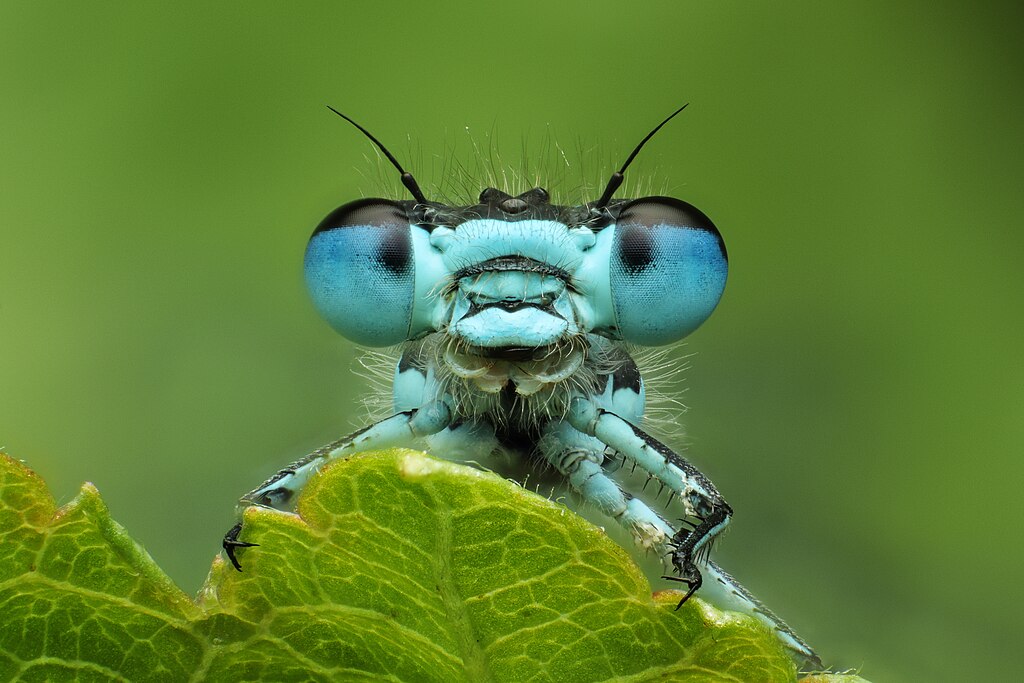
Common Blue Damselfly | Buggingitout, CC BY-SA 4.0, via Wikimedia Commons

June saw the launch of Wiki Loves Earth 2025, the global photography competition showcasing protected areas and natural landscapes around the world. This year, England participated alongside Wales and Scotland for the first time and I’m delighted to share that three photos from England placed in the international top 20, announced this December.

You can see the local winning images, including those from the UK, on Wikimedia Commons.

July

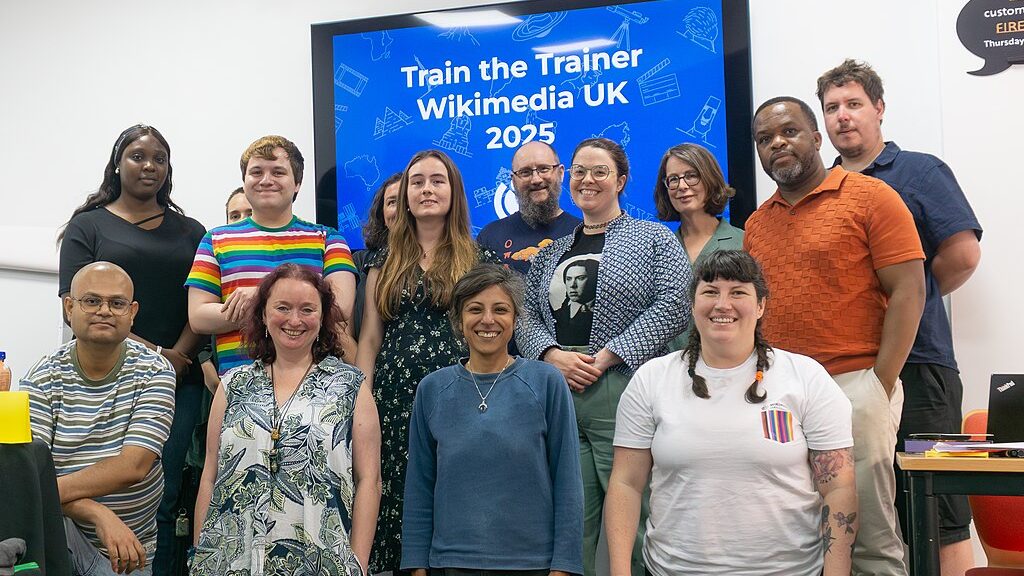
Wikimedia UK’s flagship Train the Trainer course returned in summer 2025, bringing together volunteers from across the UK and around the world to build the skills and confidence needed to run Wikipedia editing events in their own communities.

Designed to strengthen both delivery and diversity, this year’s programme welcomed 23 participants from eight countries, taking part in person and online. 
You can read the full report where participants reported feeling better equipped to make positive change in their communities as a result of the course.

Common Blue Damselfly | Buggingitout, CC BY-SA 4.0, via Wikimedia Commons

August

In August, I felt incredibly privileged to attend Wikimania in Nairobi, Kenya. This annual conference brings together nearly a thousand Wikimedians for workshops, lightning talks, keynotes, panels, social events and more. It’s a wonderful opportunity to meet fellow open knowledge advocates from around the world.

Even after a decade in my role, I come away from Wikimania every year having learned more about this extraordinary movement. This year, I also attended the first in-person meetings of the new interim Global Resources Distribution Committee, of which I am one of three affiliate representatives, and I sang with the Wiki Choir for the first time, performing in Swahili at the closing ceremony.

September

In September we published our latest Strategic Report, and held our Annual General Meeting, where Adrian Beidas, Douglas Scott and Ian Watt were elected to the board.

Following an external recruitment process, we also announced Wikimedia UK’s new Chair of Trustees, Lucy Yu, and welcomed former philosophy teacher Dr Sally Latham to the staff team in the newly created role of Education Lead. Sally is charged with driving forward our programme in secondary schools, and is already accelerating our work and relationships in this area.

October

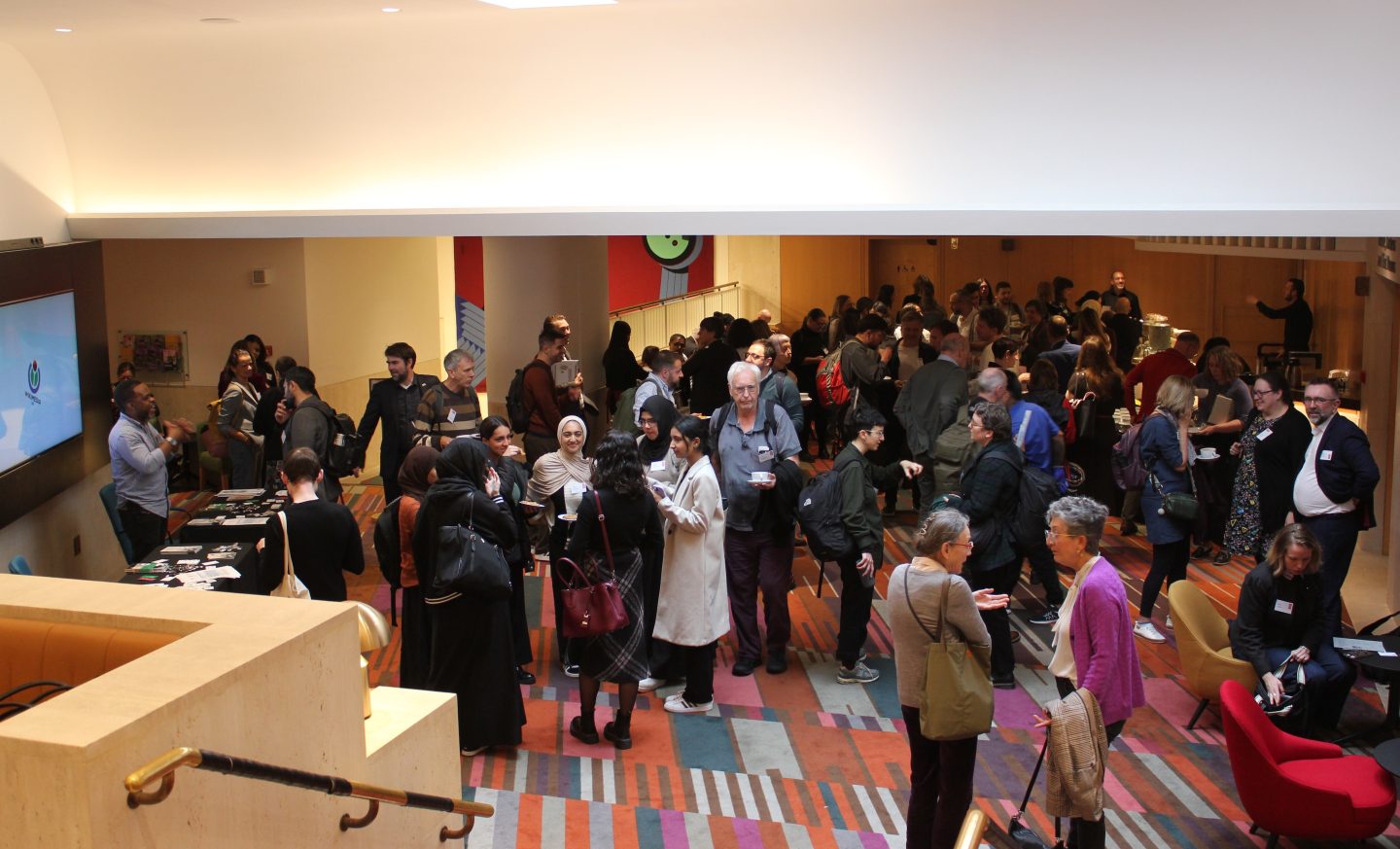
On 20 October, Wikimedia UK joined forces with the Wikimedia Foundation and the British Library to explore the impact of AI on open knowledge and the wider information landscape. This day-long summit brought together experts and practitioners to discuss the threats and opportunities at the intersection of AI, open knowledge and human rights.

With 150 participants from across the open, policy, culture, higher education and technology sectors, the Knowledge is Human summit asked how we can ensure machine learning supports human learning, and how we build sustainability and information integrity into new models of content creation.

Knowledge is human summit | British Library October 2025 (Photo by Greta Beccarello)

November

We held our annual online Community Celebration, bringing together staff and volunteers in what was an uplifting event highlighting the ongoing, sometimes painstaking, but always meaningful, contributions of individuals and partner organisations.

We also announced the winners of the UK Wikimedian of the Year Awards 2025. The UK Wikimedian of the Year was jointly awarded to longstanding contributor Andy Mabbett and community leader Jo Baines, Partnership of the Year went to the Khalili Foundation, and librarian Colette Townend received the Up and Coming Wikimedian award. 

Congratulations, and heartfelt thanks, to all winners and nominees!

December

While much of our chapter’s work is focused on the UK, as one of the larger Wikimedia affiliates we also have an important role to play in the wider international ecosystem, supporting the Wikimedia 2030 strategy through collaboration, leadership and innovation.

As part of this commitment, I regularly attend online meetings of the Executive Directors group, and was pleased to join an in-person ED retreat in São Paulo, Brazil, in early December. Over three days, I gave presentations on Wikimedia UK’s work on indigenous languages and climate information, co-presented a lightning talk on the Volunteer Supporters’ Network (which Wikimedia UK jointly manages with Wikimedia Argentina), and contributed to in-depth discussions about affiliate governance, community development, and external trends, including changing patterns of engagement with Wikimedia and information more broadly.

I also took the opportunity to spend a few days travelling along Brazil’s Costa Verde, accompanied by a talented local photographer and Wikimedia contributor.

This experience, along with many others across the year, was a powerful reminder that a commitment to open knowledge crosses borders and backgrounds. It’s also how the Wikimedia movement has grown and thrived over the past 25 years. I hope you’ll join me in celebrating this big birthday in 2026, and continue to support open knowledge in your own way, whether as a contributor, donor, partner, or reader.

Wishing you a peaceful festive season and a hopeful new year!

Topics for impact

By Dr. Lucy Hinnie |

Alongside its new Education Lead Sally Latham, Wikimedia UK has also appointed its first Topics for Impact Coordinator. This blog discusses what Topics for Impact means for the Wikimedia movement in both a global and UK context.

Introduction

‘If we fail to move beyond speeches into real action, our societies will lose faith’ – Luiz Inácio Lula da Silva.

In November, over 56,000 individual delegates made their way to Belém, Brazil, to participate in the COP30 climate summit. Each day the issue of climate change becomes more and more pertinent to lives across the globe. The impact of our ‘real action’, or indeed lack of action, when it comes to questions of climate, will be felt for generations to come. 

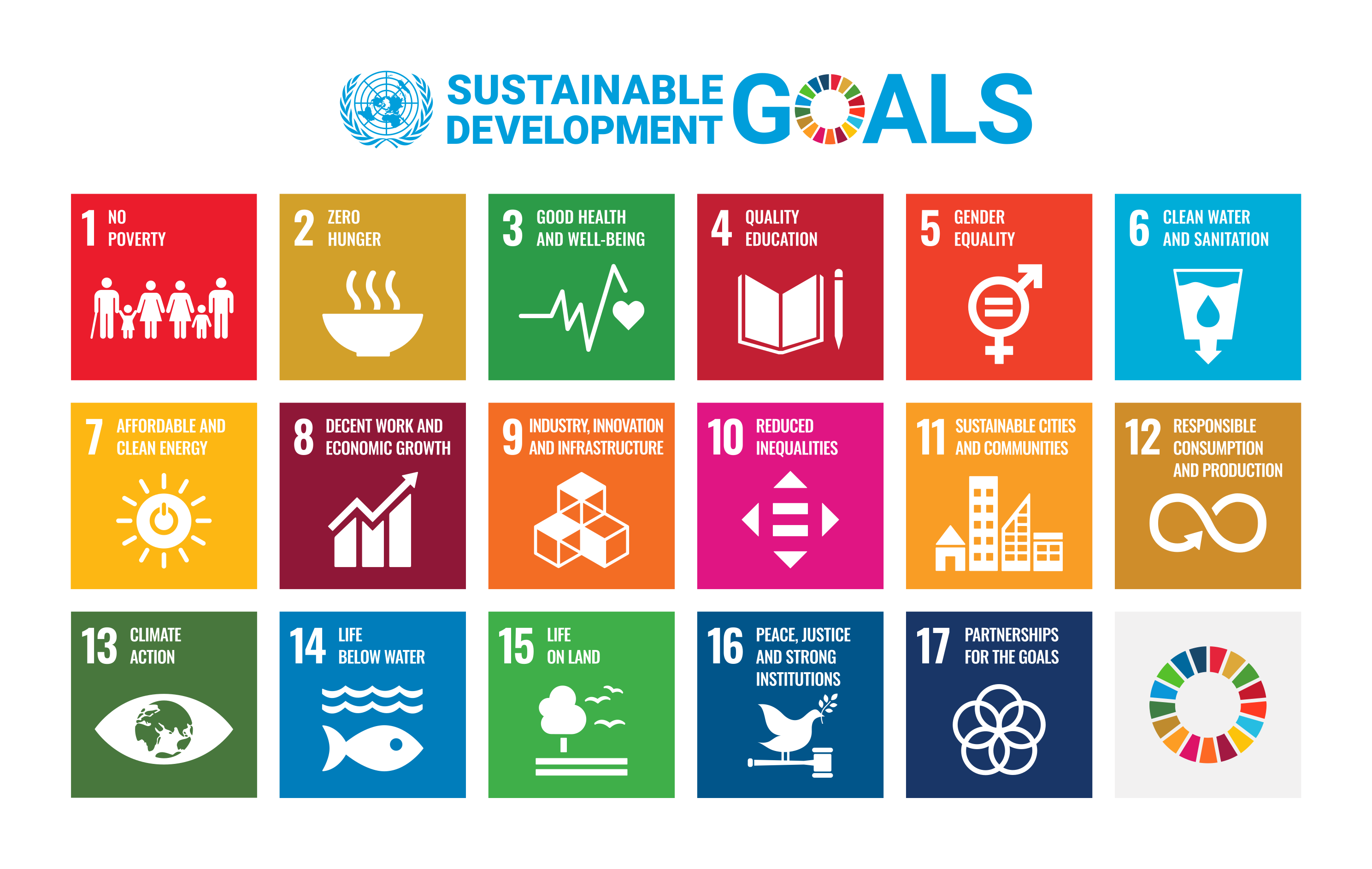
This urgency is crystallised in the UN’s 17 Sustainable Development Goals which cover a number of crucial elements of human life: from energy to the economy, oceans to land, health to hunger. In these aims, the UN lays out ‘a shared blueprint for peace and prosperity for people and the planet, now and into the future’. A commitment to these sustainable goals is integral to the Wikimedia UK 2025–30 Strategy. Under our Strategic Aim 3, we will: Increase free, verified and open access to knowledge and information about the climate crisis and other important topics, by delivering impactful projects with relevant partners, and advocating for the release of content.

With the proliferation of Large Language Models often referred to as “AI” and mis- and disinformation, keeping information on Wikipedia accessible, free and moreover, verifiable, has never been more important. In shifting focus and time to topics for impact, we will effect change that has positive and powerful repercussions for society.

What are topics for impact?

The question of what ‘topics for impact’ are, and how they relate to both our work and global society, is an important one. Looking at the Wikimedia movement’s work to ‘identify topics for impact’, we can see a real and tangible focus on ‘the different ways in which Wikimedia content can make an impact on improving people’s lives’. In looking at the social issues underpinning the UN SDGs, a picture starts to emerge of Topics for Impact as those which directly concern human wellbeing: in this context, health, human rights and climate.

Wikimedia UK and Topics for impact

Precisely defining what these topics for impact are is a curious process: on the one hand, the answers are crystallised in the UN SDGs. On the other, there is an element of reactiveness to defining a topic for impact, as the world is ever-changing, with new, pressing issues and questions emerging in unpredictable ways and at pace. At Wikimedia UK we are committed to making informed decisions about where to put our resources and expertise in open knowledge practices.

Wikimedia UK has a strong history of work which intersects with what we now term topics for impact. Since 2022, we have supported our first climate-focussed residency at the Global Systems Institute, with Wikimedian-in-Residence Tatjana Baleta. The articles edited as part of this project have gained over 190 million views. 

From 2021 to 2025, Adam Harangozó was Wikimedian-in-Residence at the National Institute for Health Research, improving access to health information on Wiki. Ongoing work at partner organisations like the IDEA Network (Inclusion, Diversity, Equity & Accessibility in Open Knowledge Network) at the University of St Andrews reflects our commitment to engaging with partners doing crucial work in areas like medical knowledge equity. 

In establishing a permanent role on the Programmes team for Topics for Impact, Wikimedia UK is further emphasising our commitment to these vital areas of research and development, enriching existing partnerships and seeking new areas of work.

Where are we looking first?

Applying large global issues to a local context can be daunting: how climate change presents itself, for example, varies hugely from country to country. For the four nations of the UK, we will be looking closely at community needs, as well as strengthening our relationship with the Wikimedia Foundation’s Wiki For Human Rights campaign. Even closer to home, our latest Mini Wiki challenge focuses on images of climate impact and the elements on day-to-day life in the UK.

Our commitment to ongoing annual drives like Wiki Loves Earth and 1lib1ref will be reinforced with topics for impact in mind, and newer initiatives such as 2025’s Mini Wiki will be utilised as tools for change in the key areas of impact: health, human rights, and climate change. Through promoting editing, upskilling volunteers and interested members of the public, and close attention to metrics of change, we will develop and deliver an impactful programme of work.

This programme will be sustained by the creation of new partnerships with like-minded organisations working in these areas. There is a reciprocity to how we work in our medium and long-term projects: in helping to transform content in a topic area, we uplift the voices of partner organisations, and in turn, they may find the way they work shifting in new and helpful directions, thanks to an increased understanding of the value of open knowledge.

A little about me

I’ve worked in the Wikimedia movement for nearly five years now, beginning my career as Wikimedian in Residence at the British Library (2021–23) and going on to work with the Connected Heritage project (2021–23), the Royal Albert Memorial Museum (2022–24) and the GLAM-E Lab (2023–24).

I currently work part-time at the University of Leeds as their Wikimedia and Open Knowledge Adviser alongside my work as Topics for Impact Coordinator at Wikimedia UK.

Get involved

If you have any questions, thoughts or ideas around topics for impact, please don’t hesitate to get in touch with programmes@wikimedia.org.uk. We are always interested to hear from potential partners, contributors and interested parties.

Volunteer project grants – Northern Ireland

Over the last few years, despite a big increase in interest in our small grants programme, we’ve noticed there haven’t been any recent applications from or focussing on Northern Ireland.  In response to this, we’re making a special call for applications from Northern Ireland, and we’ve made an additional £500 available for the remainder of the 2025-6 year. We’d really like to encourage those based in NI to apply!  

A bit more about these grants:

Wikimedia UK operates a small grant programme to support Wiki volunteers to complete activities which work toward our strategic aims.  Grants are usually for amounts between £5-£250, and can include: 

  • Support for Wikimedia-related events such as editathons or meetups
  • Research, marketing & administrative time for a Wikimedia-related project
  • Travel funds relating to Wiki activities
  • Books & access to other sources for improving the Wikimedia projects
  • Equipment to help support improving the Wikimedia projects.

Recent project grants have included support for the Aberdeen meetup, British Newspaper Archive access to support content creation, and competition prizes.

You can find out more about the grants programme including how to apply here: https://wikimedia.org.uk/wiki/Project_grants – please mention Northern Ireland in your application so that we can process it accordingly.  Ideally we’d like to receive your application before mid-January 2026; but please do get in touch with me at sara.thomas@wikimedia.org.uk if you’d like to discuss your idea before applying, or if you have any ideas that might be for a later application. 

Community Celebration 2025 – Highlights and resources

By Rupal Karia |

On Saturday 15th November 2025 we were delighted to host our fourth annual  Community Celebration. This yearly event is an opportunity for our community to gather online, share and celebrate the incredible work that’s taken place over the last year to support Wikimedia projects and open knowledge in the UK. We also announced the UK Wikimedian of the Year awards and celebrated the winners of the Wiki Loves Earth competition.

It was wonderful to see many of our community at the celebration and to observe the mutual support and encouragement of our community. There were around 45 community members, attending from all over the UK and even beyond. 

We were welcomed by our Chief Executive Lucy Crompton-Reid, who thanked the community for the incredible work they contribute to Wikimedia projects and Open Knowledge in the UK. 

We then launched into a series of lightning talks delivered by members of the Community about their Wikimedia projects this year. These presentations were a small selection to highlight the extraordinary and varied work the UK community have been working on over the last year.

Sophie Whitfield, Wikimedia UK trainer told us about her new year resolution which involved looking at Cambridgeshire plaques and who gets commemorated and who does not. 

Ceryl Evans, Wikimedia UK Trainer talked about a few of the fascinating women she has written about on Wikipedia and how she has made friends with wiki critics along the way.

Keira Evans, Welsh editor talked about LGBTQ activists in Wales and how collective editing is encouraging new editors and improving representation of LGBTQ people in Wales on Wikipedia. 

Josef Anthony from Nigeria talked about his Wikidata project which focused on increasing representation of underrepresented historical figures from the UK. 

Colette Townend, a librarian at Lambeth Libraries in London talked about the monthly meet-up she runs from the library which encourages community diversity and cultural interests through the use of library resources. 

Ian Watt, Wikimedia UK Trainer and Trustee of Wikimedia UK talked about Vibe Coding with Wikidata and how you can create a website or app in minutes, using data queried from Wikidata. 

Janet Chapman from the Hackney History Society talked about the monthly edit-a-thons taking place in Hackney to improve coverage of historical and present day Hackney women.

Karen Bowman, Wikimedian based in Edinburgh, talked about the personal impact of becoming a Wikimedia editor. 

And finally, Bee Campbell, Wikimedian from Norfolk, talked about how they have been creating and editing articles about the city of Norwich, uncovering rich layers of the city’s history.

UK Wikimedian of the Year Awards

The UK Wikimedian of the Year Awards recognise the work of the community that collaborates with and supports Wikimedia UK. Last year’s Partnership of the Year winner, Francesca Farmer from GLAM-e Lab, announced the winners of this year’s UK Wikimedian of the Year Awards. Thank you to everyone who made nominations and a huge well done to all the nominees and the winners highlighted below. 

UK Wikimedian of the Year: Joint winners – Andy Mabbett and Jo Baines

Partnership of the Year: Khalili Foundation

Up and Coming Wikimedian: Colette Townend

Wiki Loves Earth Winners

We showcased the winners of this year’s Wiki Loves Earth. This was the first time we ran the competition in England and the calibre of photos was incredibly high. 

Judges were so impressed by the quality of the images and commented on how difficult it was to choose winners. Thank you to everyone who was involved in supporting the competition to run this year; from those who contributed images, the volunteer judges and to volunteers Sophie Whitfield, Ian Watt and Ffion Cleverly for all their hard work behind the scenes ensuring the competition ran smoothly.  

You can see the full list of winners for Wales, Scotland and England. If you’d like to hear about future UK community events and how you can get involved please sign up for our newsletter, or join our membership to help govern the charity.

Heritage 3D Data at Risk project awarded National Lottery Heritage Fund Grant.

UK Heritage 3D Data at Risk: Developing a Strategy for Long Term Access & Storage awarded grant to ensure future access to the UK’s 3D heritage data.

Today, Wikimedia UK is announcing a £56,198 grant from The National Lottery Heritage Fund to safeguard access to the UK’s 3D heritage data and create a sustainable future. 

3D digitisation has rapidly become more affordable and accessible to heritage organisations seeking new ways to investigate the historic collections and spaces in their charge, and engage audiences with the stories connected with them. At the same time, national UK infrastructure has not kept pace with vast amounts of 3D data being produced leading many organisations to rely on commercial and proprietary platforms for storage, hosting, and dissemination tools. As the priorities of commercial platforms and the needs of the heritage community substantially differ, sustainable access to the UK’s digital 3D heritage data is in a precarious position.

The UK’s digital 3D heritage data is a unique asset that is of immense value for both professional researchers and general audiences alike and without this funding from the Heritage Fund access to this valuable resource is at risk of being lost. The UK Heritage 3D Data at Risk project will provide both short term guidance for UK heritage organisations to safeguard their 3D data, as well as indicate a long term strategy for sustainable access informed by the needs of professionals and audiences. In short, the project aims to:

  • Save heritage by creating a strategic plan to preserve and provide long-term access to over 5,000 at-risk digital 3D models currently on the Sketchfab platform. 
  • Protect the environment by researching and recommending sustainable 3D publication workflows that reduce duplicated effort and server usage. 
  • Champion inclusion, access, and participation by engaging a diverse range of stakeholders through various methods, including providing financial support to remove barriers to involvement. 
  • Boost organisational sustainability by giving UK heritage institutions a practical roadmap to future-proof their 3D collections. 

If you are working with 3D data within the UK heritage sector, UK Heritage 3D Data at Risk would love to hear from you. You can contribute your organisation’s story via a short online interview, online survey, participating in an online workshop, or joining us for an in-person event towards the end of the project. Please visit this WikiCommons page or send a message to 3Ddata@wikimedia.org.uk for more information.

Quotes

Lucy Crompton-Reid, Wikimedia UK Chief Executive said: “We are extremely pleased to have received this support from The National Lottery Heritage Fund. Thanks to National Lottery players we will be working on a roadmap to preserve 3D heritage. 3D files are a fantastic way for the public to explore the past, getting up close to objects that may be hundreds of miles away or behind glass to preserve them. The scans and models of everything from finger rings to entire buildings are an invaluable resource that must remain accessible now, and for future generations.”

Independent digital heritage consultant Thomas Flynn said “With gratitude to The National Lottery Heritage Fund and National Lottery players, I am delighted that we can move forward with this project. This funding provides a critical lifeline for thousands of unique 3D digital heritage assets from heritage organisations across the UK that are currently at risk. Working in partnership with Wikimedia UK and engaging with heritage professionals from across the country, we can now build a collaborative roadmap to help ensure this invaluable data is preserved and remains accessible for researchers, educators, and the public for generations to come.”

Stuart McLeod, Director of London and South at The National Lottery Heritage Fund, said: “Thanks to National Lottery players, we’re proud to support this vital project that will look to create best practice to safeguard the UK’s digital heritage. It will offer guidance for both small and larger organisations for preserving 3D heritage, including thinking about the environmental impacts. It will help to ensure that heritage organisations across the UK can continue to innovate, engage and inspire through digital technologies and protect our heritage for future generations.”

NOTES TO EDITORS 

About Wikimedia UK

Wikimedia UK is the national charity for the global Wikimedia movement. Our mission is to enable people to engage with open knowledge and access reliable information in order to develop their understanding of the world, and make informed decisions about issues that affect them. We work with educators, communities and cultural institutions to make knowledge more equitable, representative and accessible across Wikipedia and its sister projects.

About Thomas Flynn

Thomas Flynn is a UK based digital heritage specialist offering services and advice related to 3D digitisation, online publishing, open access, storytelling, and interoperability. He has worked with UNESCO, Europeana, Oxford University, Creative Commons, and many more organisations. Thomas is a Visiting Fellow to Bournemouth University’s Faculty of Archaeology & Anthropology, a co-chair of the IIIF 3D Community Group, and sits on the advisory board of the Rijksmuseum’s 2and3D Photography Conference. Thomas runs the Spatial Heritage Review newsletter and LinkedIn Group, is co-author of glam3d.org, and co-founder of museuminabox.org. Previously, Thomas was Cultural Heritage Lead at sketchfab.com and launched the British Museum’s first public online collection of open access 3D scans.

About The National Lottery Heritage Fund 

Our vision is for heritage to be valued, cared for and sustained for everyone, now and in the future. That’s why as the largest funder for the UK’s heritage we are dedicated to supporting projects that connect people and communities to heritage, as set out in our strategic plan, Heritage 2033. Heritage can be anything from the past that people value and want to pass on to future generations. We believe in the power of heritage to ignite the imagination, offer joy and inspiration, and to build pride in place and connection to the past.

Over the next 10 years, we aim to invest £3.6billion raised for good causes by National Lottery players to make a decisive difference for people, places and communities.

Further information

For further information, images and interviews please contact Thomas Flynn and Richard Nevell on 3Ddata@wikimedia.org.uk.

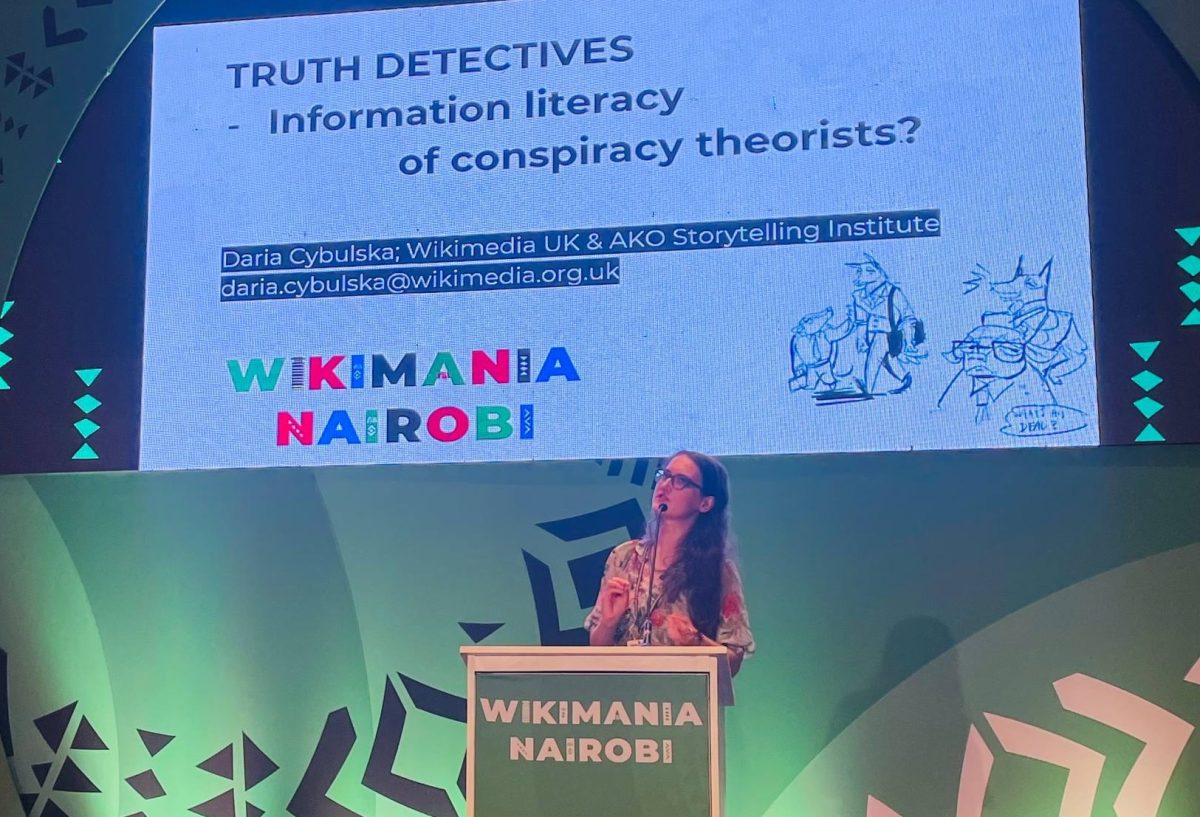
Information literacy skills of conspiracy theorists? Call for reflection

Daria Cybulska (Poland/UK) is the Director of Programmes and Evaluation at Wikimedia UK, leading programmes and advocacy for knowledge equity and information literacy. She designs projects and partnerships for digital human rights on Wikipedia. She shapes how Wikimedia UK can support a democratic and empowered society in the UK. Daria is a trustee at Global Dialogue, a platform for human rights philanthropy, and in 2023/24 was awarded a Churchill Fellowship, investigating Central Asia’s online civil society and its resilience responses to a shrinking civic space. She was also a fellow at the AKO Storytelling Institute, based at the University Arts London. The Institute is investigating the theory and practice of storytelling-for-change across disciplines – art, campaigning, social impact, research, philanthropy. At AKO Daria created a narrative shift project on information literacy of conspiracy theorists. 

Wikimedia UK demystifies and drives engagement in open knowledge, as the national charity for Wikipedia and the other Wikimedia projects. We have been delivering education activities for over ten years, with an explicit focus on the use of Wikimedia as a tool to develop information and media literacy skills. Our programme takes place online and in schools, universities, museums, libraries and community settings. 

Our research shows that learning to contribute to Wikimedia helps people better understand, assess, and navigate online information, with participants in our programme reporting increased confidence in their digital skills and media literacy. Learning to edit Wikipedia gives participants a chance to practice understanding content, verifying information, applying critical thinking skills, reflecting on one’s role within the online spaces, and using collaborative and group learning skills. 

Equipped with the essential tools to navigate the digital landscape, individuals are also empowered to become active contributors to the online world and increase their civic participation; strengthening UK society. 

While Wikimedia UK’s work demonstrably develops information literacy within its programme participants, this development happens with a strong focus on the intellectual, cognitive skills of the individual learner. In contrast, my research is inviting people to explore how emotion shows up in critical thinking, and how, if emotions are not considered in information literacy education, this can derail the learning process, while also fueling polarisation.  

We explore this by looking at misinformation and conspiracy theories. Conspiracies can drive polarisation in society and divide how we think and support a situation where we don’t even share the same view on reality. However, by promoting simplistic arguments about being cleverer than others, information literacy educators can encourage self-righteousness and possibly even closed mindedness, making it hard to consider or connect with those with different values and ideas (and conversely, the conspiracist side talks about others in a dismissive way too). 

If we resist taking a disdainful view towards those believing disinformation or conspiracy theories, and instead focus on recognising a common love of research or skillful use of emotions, we may be able to actually push against some of the polarising effects of misinformation.

There are things that information literacy educators and conspiracy theorists have in common. These similarities show up in phrasing used commonly by both sides:

1. Methods for assessing information – check sources, don’t immediately trust what you see, connect the dots, think about who funded the information, do your own research, etc.

2. Personality traits and features of those who ‘know better’ – love for research, desire to know the truth.

3. Active participation in learning.

What’s markedly different though is the use of emotion – in the conspiratorial realm, the research approach includes a strong element of excitement of investigation or discovery, but also of anxiety about the world. There is also the desire to belong (to a group that’s ‘in the know’), satisfaction of knowing something – and of correcting or enlightening others. Then there’s a deeper set of emotions such as shame of being proven wrong or needing to change opinion, discomfort and anxiety of not being certain. Conspiracy theories themselves also hold a captivating allure – they present a coherent and emotionally charged storyline, captivating and engaging audiences.

In contrast, emotions tend to be discredited in the domain of information literacy learning, as they are deemed not objective. But emotion guides our attention, and so it is not possible to completely separate them out from the activity of learning. While the general focus of literacy education has primarily been fixated on the pursuit and validation of facts, it is crucial to address the emotional dimensions entwined within these processes. We also need to consider how to confront and mitigate the emotional elements that propel individuals towards embracing disinformation. 

One aspect emerges as absolutely crucial: complexity resilience – being more comfortable with an increasingly ambiguous, complex, and difficult world. Rather than simply offering definitive answers or actions (like conspiracies do), educators should seek to emphasise the proposition of diverse ideas, perspectives, and narratives – and be comfortable with that diversity and complexity.

Teachers hold an important key in guiding information literacy, but cannot do it alone. A multidisciplinary, collaborative approach is called for – including a psychologist to account for the emotional layer (both for learning, and teaching), librarian to guide how the knowledge ecosystem is built, and a journalist with reliability strategies. 

This could be considered while we debate the overall shape of information literacy education in the UK. Wikimedia UK sees the current provision for the development of media and information literacy skills within English secondary schools as patchy at best. From our experience we hear that teachers themselves may never have received any formal training in relation to media and information literacy. But it is more vital than ever that young people have the knowledge, skills and confidence to question what they see online, whilst understanding what constitutes reliable, trustworthy information. 

We welcome comments on how the approach to ‘complexity resilience’ and the role of emotion in education could be included in teaching of information literacy in schools, please feedback.